k24 swapped
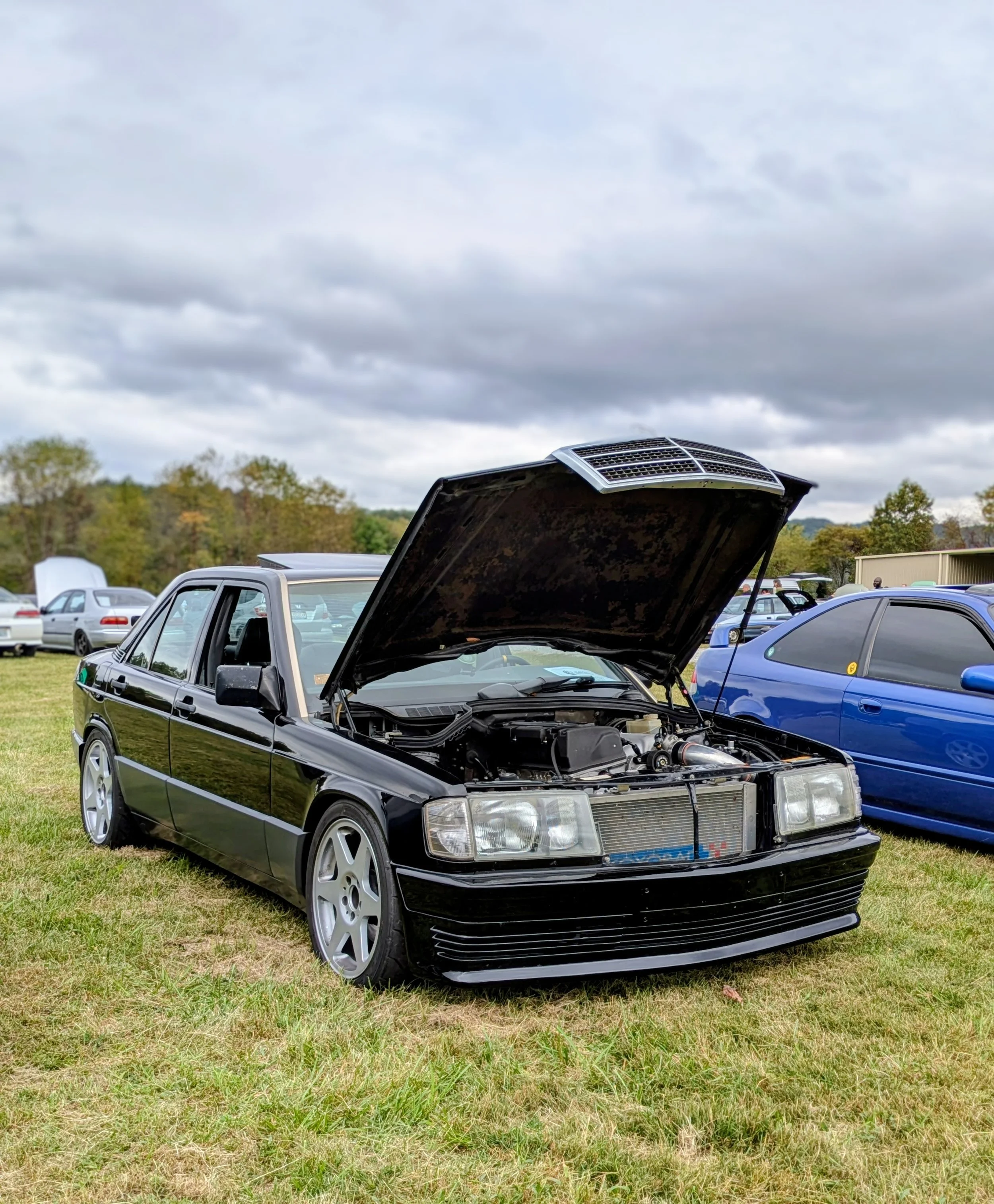
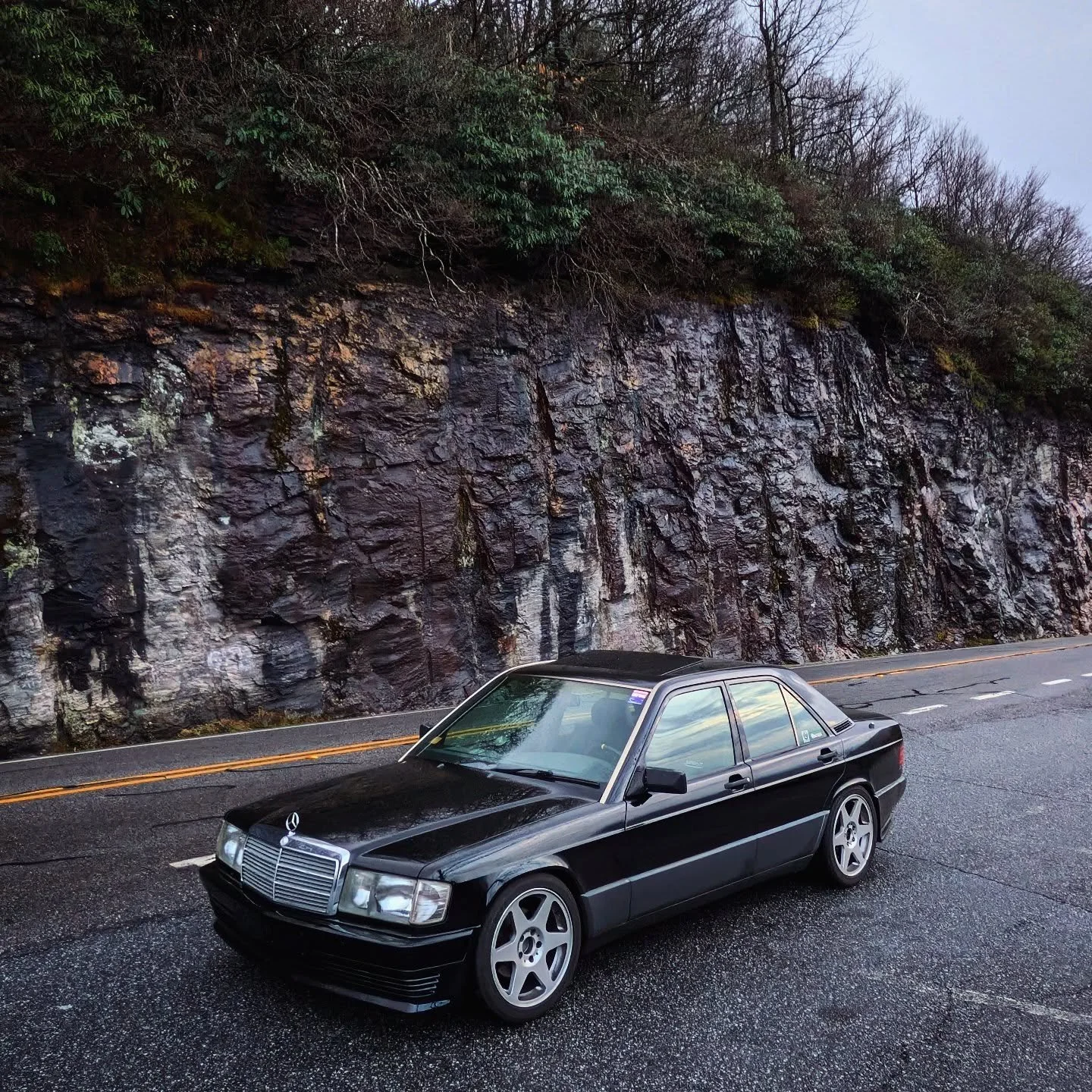
mercedes 190e
why?

dtm racecars
German Touring Car racing, or Deutsche Tourenwagen Meisterschaft (DTM), of the late 80s and early 90s is often referred to as the “golden age” of DTM as it featured awesome racing with cars that captured the hearts of automotive enthusiasts around the world. The field consisted of high revving, highly modified racecars that were based on road going production cars that anyone could walk into a showroom and purchase at the time.
The Mercedes 190e’s giant front grill, wild body kit, and huge rear wing caught my attention as a teenager and I immediately fell in love. I would eventually purchase a stock, unassuming 190e to tinker with. In stock form, the 190e doesn’t scream “performance” in any way. The lethargic inline 6 and automatic transmission my car was equipped with left much to be desired. It wasn’t long before I began to crave the high revving, naturally aspirated characteristics of the 190e DTM cars of the period.
M102.983/m102.990
The 2.3-16 and 2.5-16 engines that were used in the 190e DTM racecars were extremely impressive for the time period. The last iteration of the “Cosworth” engines are said to have made 360hp with a redline of 10,000rpm - that’s nearly 150hp per liter from a naturally aspirated 4 cylinder.
The roadgoing versions of these Cosworth engines weren’t quite as impressive, however, with power outputs ranging from 168hp to 235hp. Mercedes-Benz had to sell cars with engines that had much longer service intervals and had to comply with emissions regulations around the world, so performance was limited as a result.
Chasing after more power and DTM nostalgia, I began to entertain the idea of swapping a more modern engine into my 190e. One engine in particular kept popping up during my search…

The honda k-Series

honda k24
In search of a modern engine that has the high RPM, high horsepower per liter characteristics that I was looking for, the Honda K-Series offers that and more:
Affordability
Reliability
Aftermarket Support
OEM Part Availability
Easy to Maintain
Aluminum Block
Honda K-Series engines have been swapped into thousands of FWD and RWD cars around the world. The only issue was that there was no information around swapping this engine into a Mercedes 190e. Despite this, I found a Honda K24a in my area, purchased it, and began prepping it for the first mockup in the car.
engine prep
RWD oil pan
In order to give the engine the best chance of fitting in the 190e, I installed a rear wheel drive swap oil pan from TF Works. This oil pan was originally intended to work with BMW e30s and Nissan S-Chassis. The main advantage of this oil pan is that it converts the engine from a mid-sump configuration to front-sump so it can clear the front crossmember in rear wheel drive cars. After comparing the front crossmember location in BMW e30s to the 190e crossmember location, it looked like it might work.
Additionally, the engine received a 50° VTC gear, Type S oil pump, new timing chain, tensioner, gaskets, etc.

the swap begins

Removing the original engine
One of the first main steps of the engine swap was removing the original engine. Pictured here is the factory iron block 2.6L inline 6 and automatic transmission that the car was originally equipped with. I estimate that this setup weighs at least 100lbs more than the engine and transmission that would be going in the car.
MOcking up the new engine
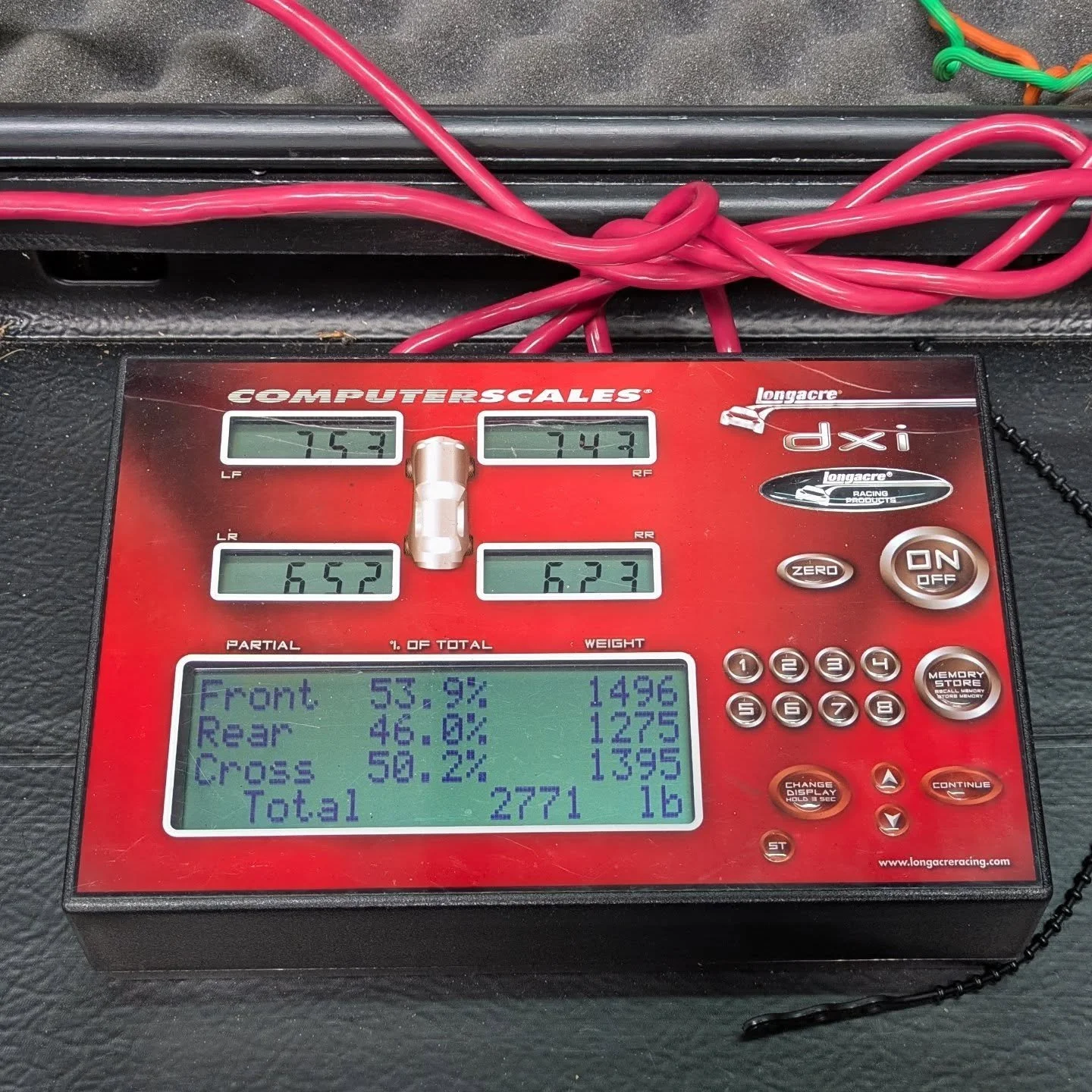
The Honda K24 and BMW/ZF 5 speed transmission were mated together and then mocked up in place. Clearance between the front crossmember and the oil pan looked really good. The engine was also able to be positioned as close to the firewall as possible which helps with front-rear weight distribution.

engine mounts
With the engine in place, I scanned it relative to the car’s crossmember and factory engine mounts which were bolted in place. I then created engine mounts using sheet metal features in Solidworks. The mounts interface with the original Mercedes rubber engine mounts and use the original hardware.

Passenger Side

Driver Side

Using the CAD files I created, the engine mount weldments were 3D printed and test fitted on the engine.


The CAD files were sent to Send Cut Send where the sheet metal parts were cut and bent. The parts were then tacked together in place and then fully TIG welded.

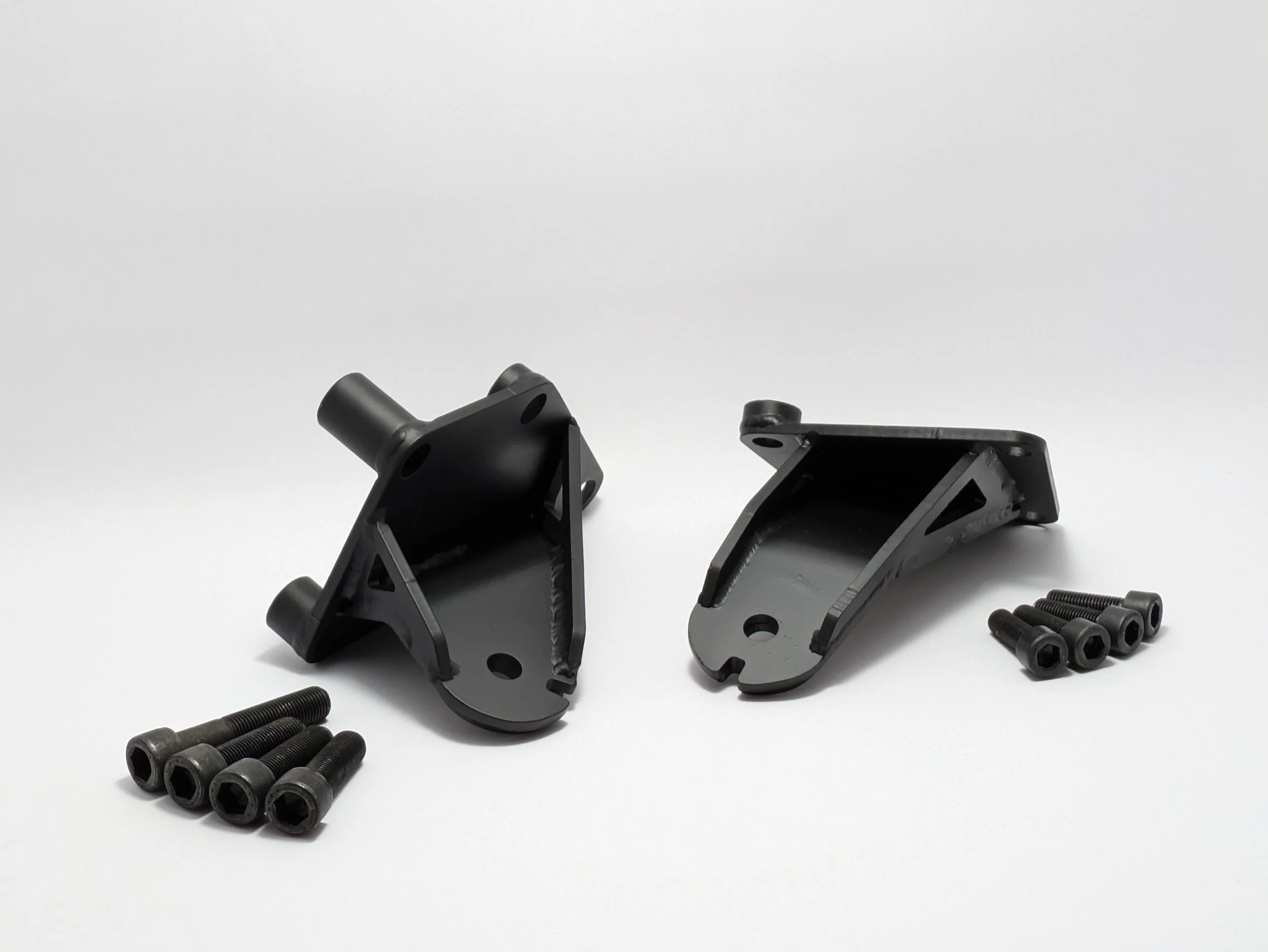

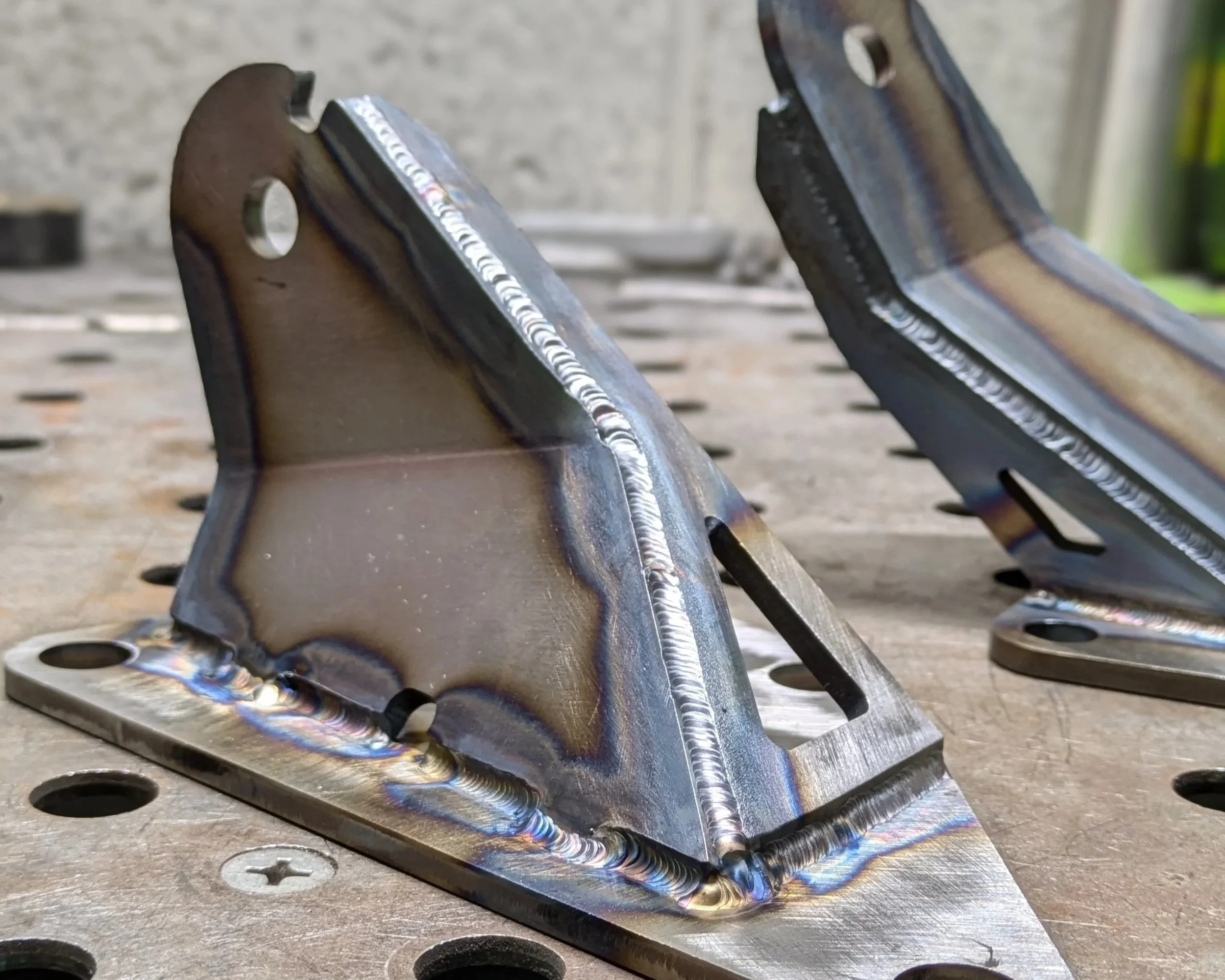
Revised engine mounts for production and sale
transmission crossmember and shifter mount
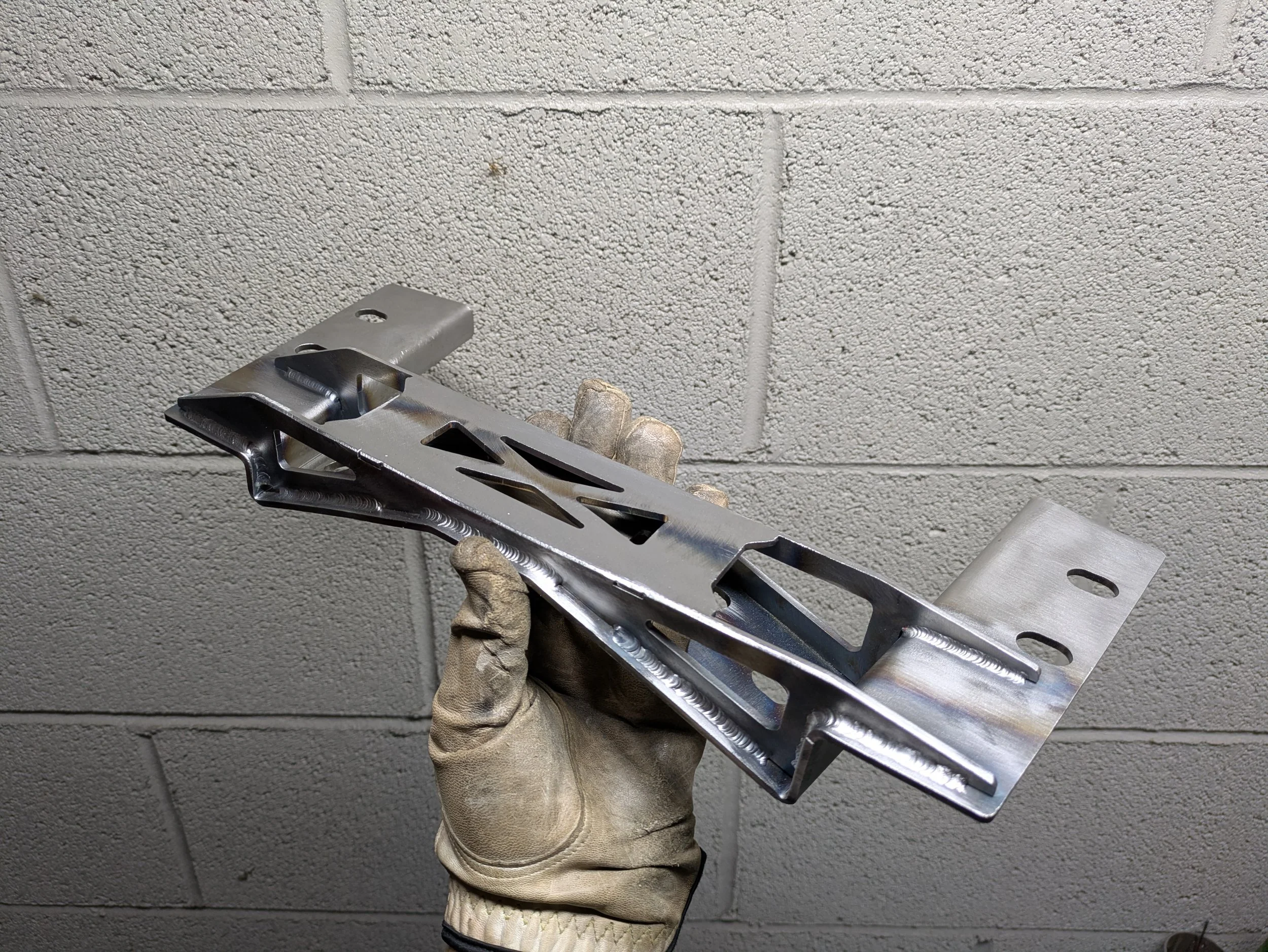
The transmission was also scanned in place and a transmission crossmember was 3D modeled in Solidworks. The part uses the original Mercedes mounting holes and hardware. It was also 3D printed and test fitted before the final parts were ordered.


The sheet metal parts were also cut and bent by Send Cut Send and fully TIG welded.

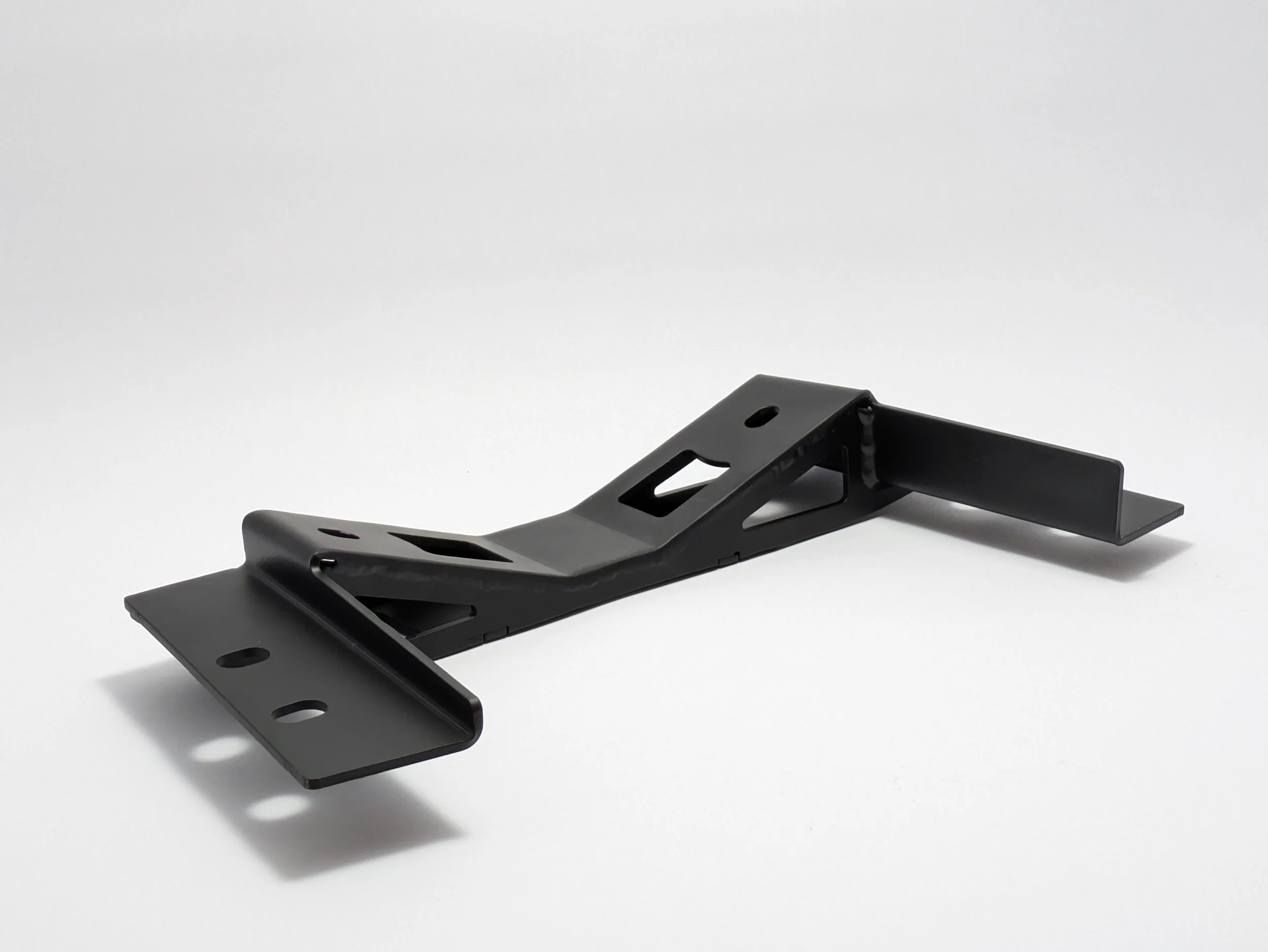
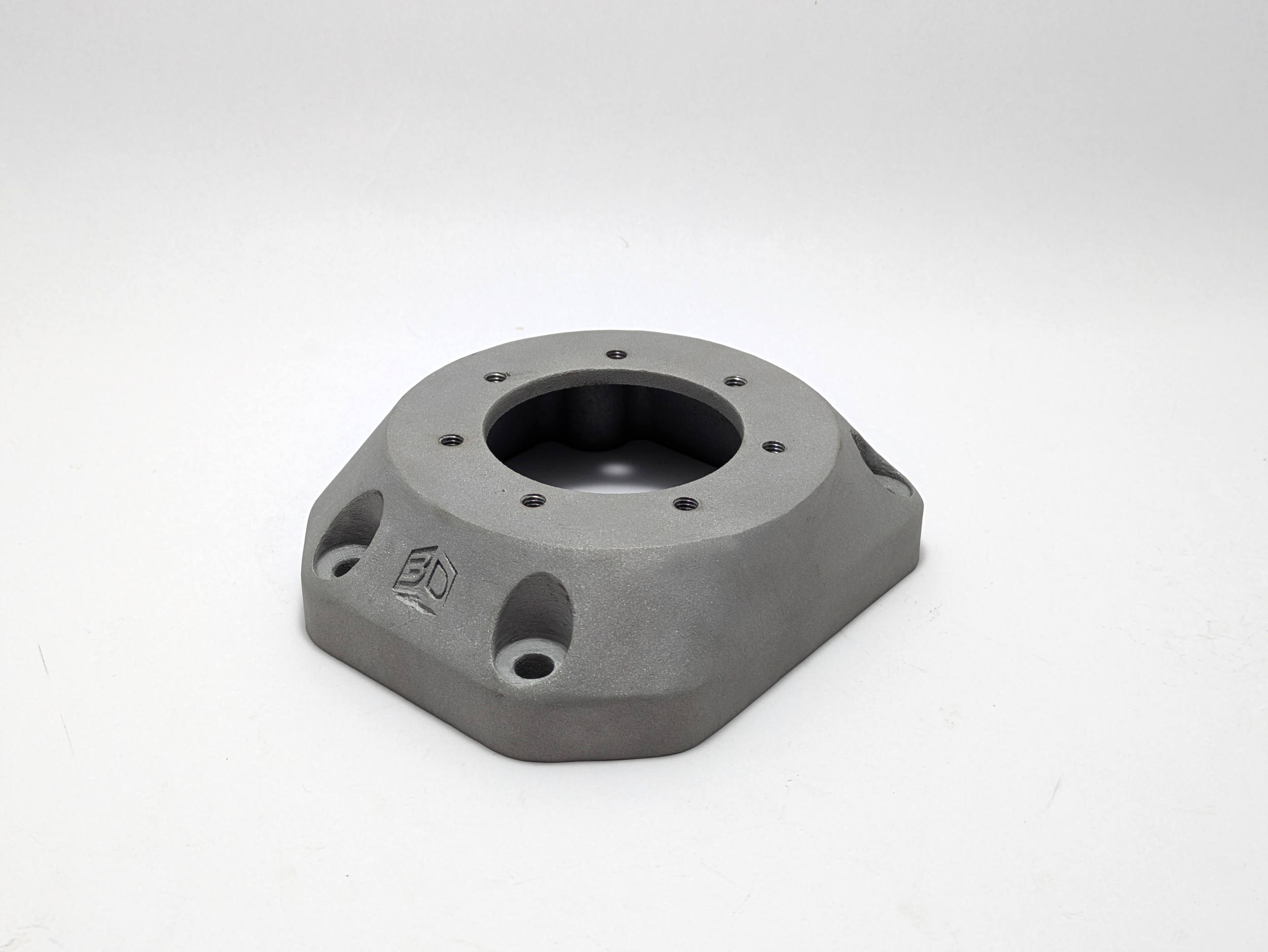
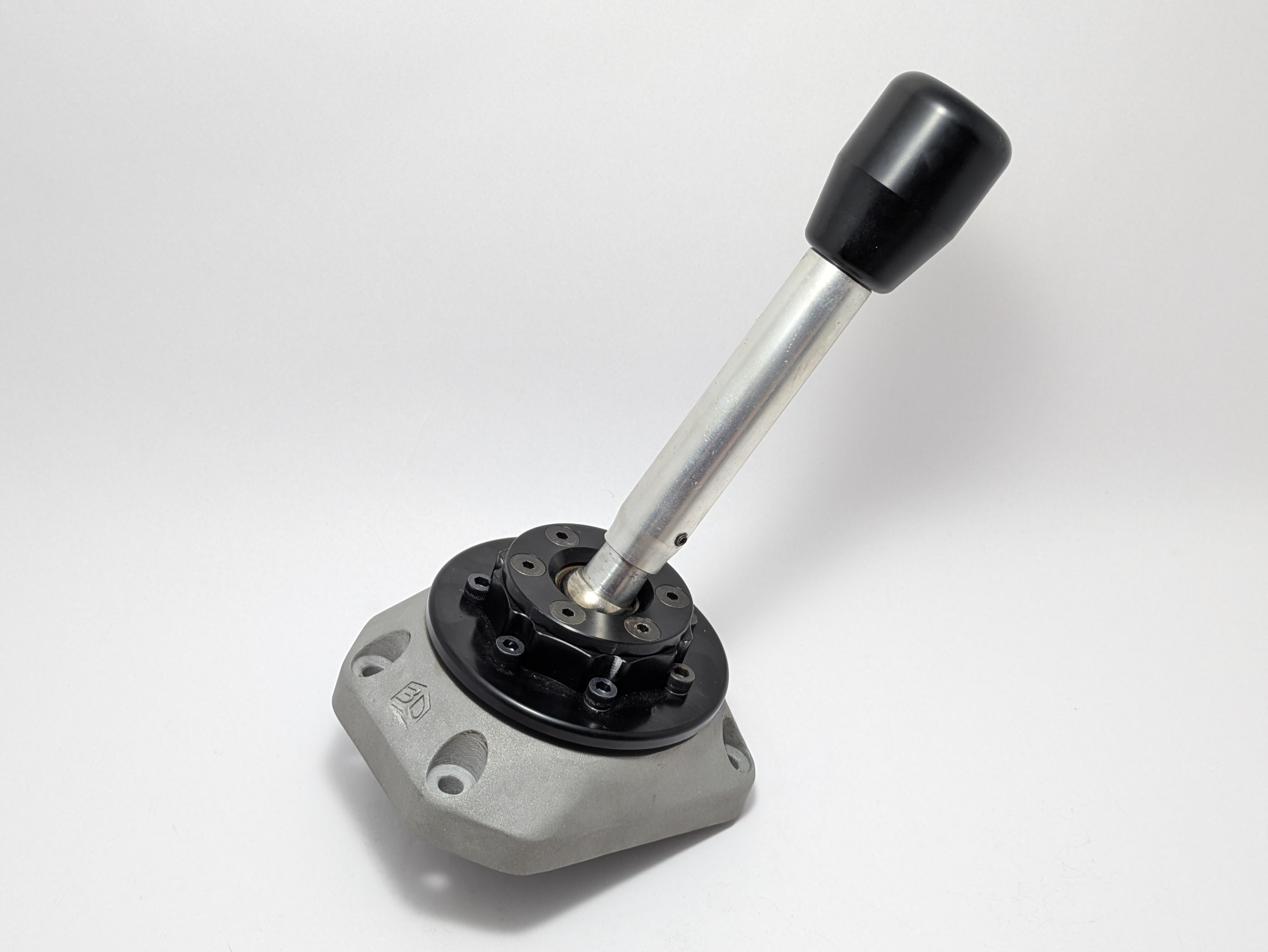
A shifter mount that adapts the Garagistic DSSR shifter to the stock shifter mounting locations on the 190e transmission tunnel was designed and 3D printed out of aluminum.
exhaust manifold
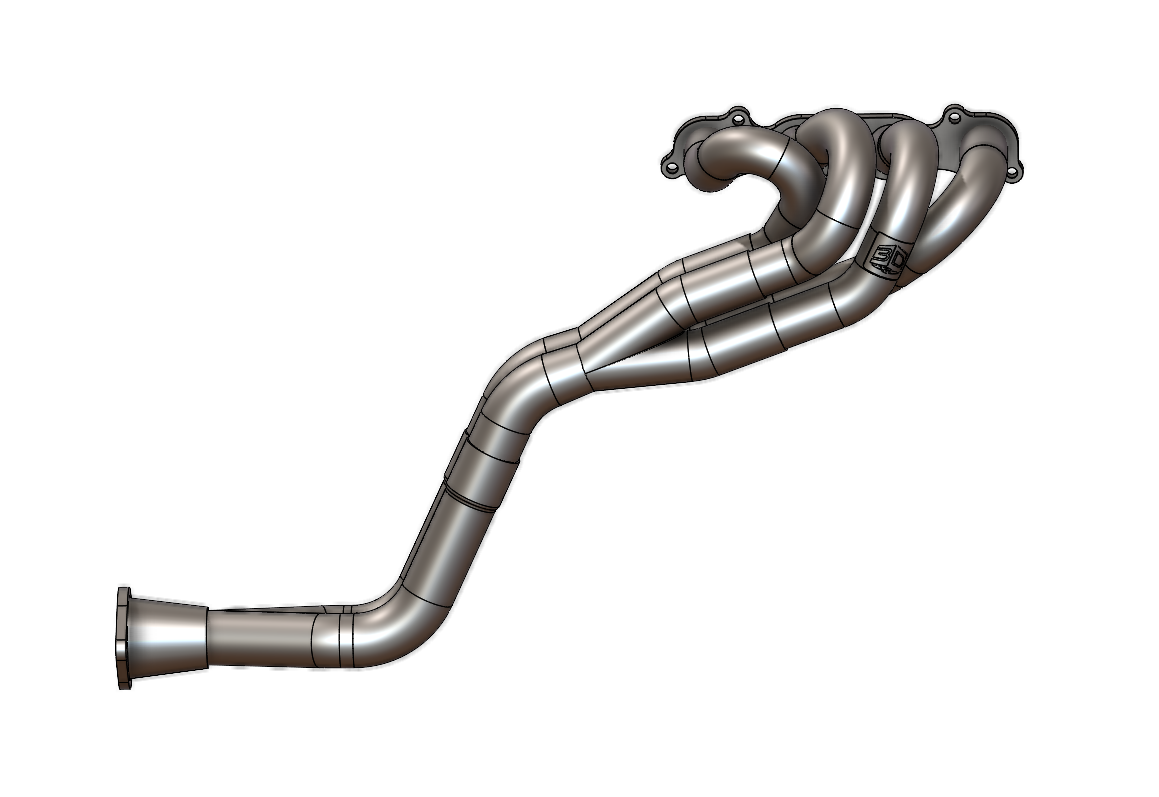
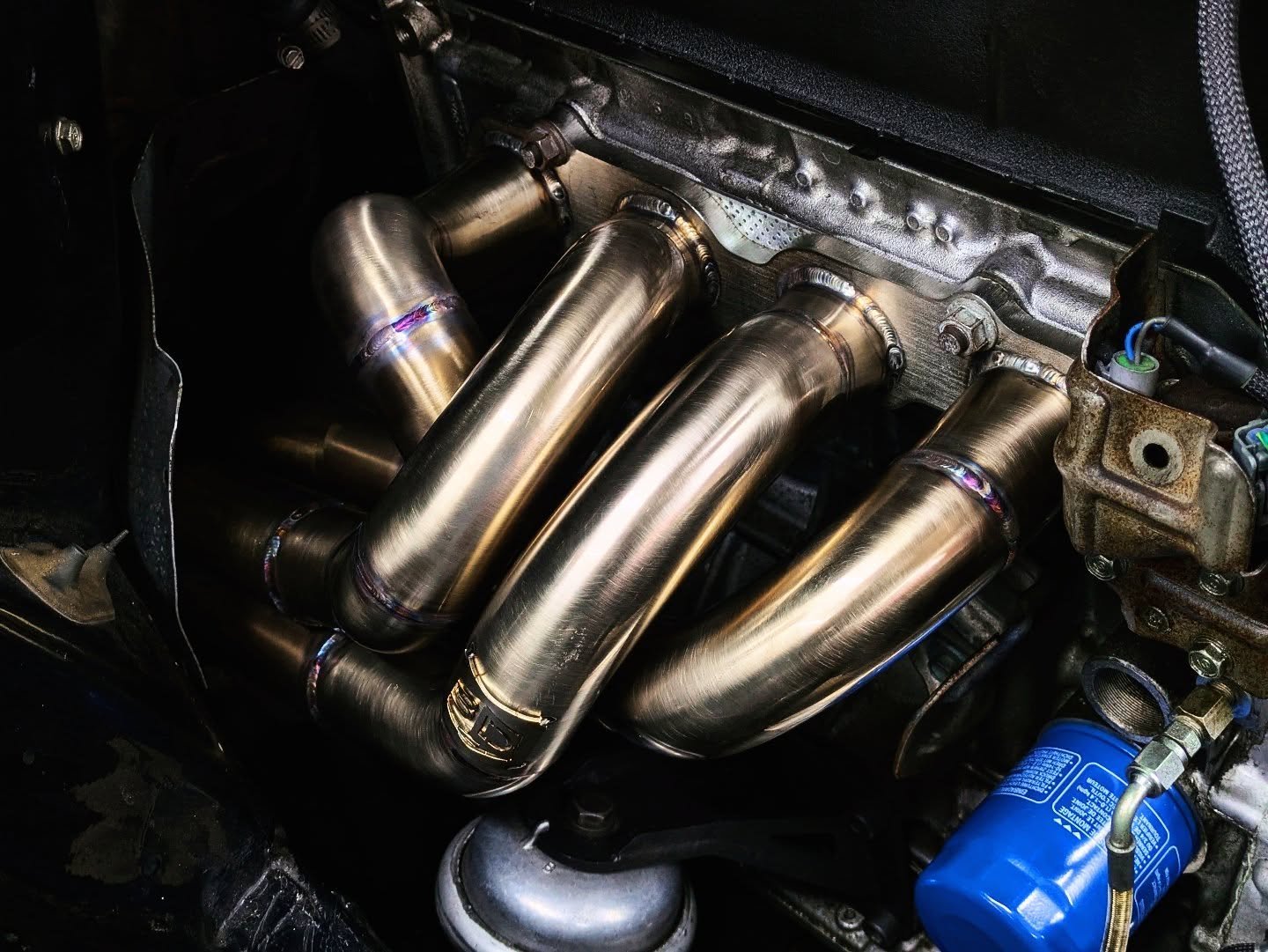
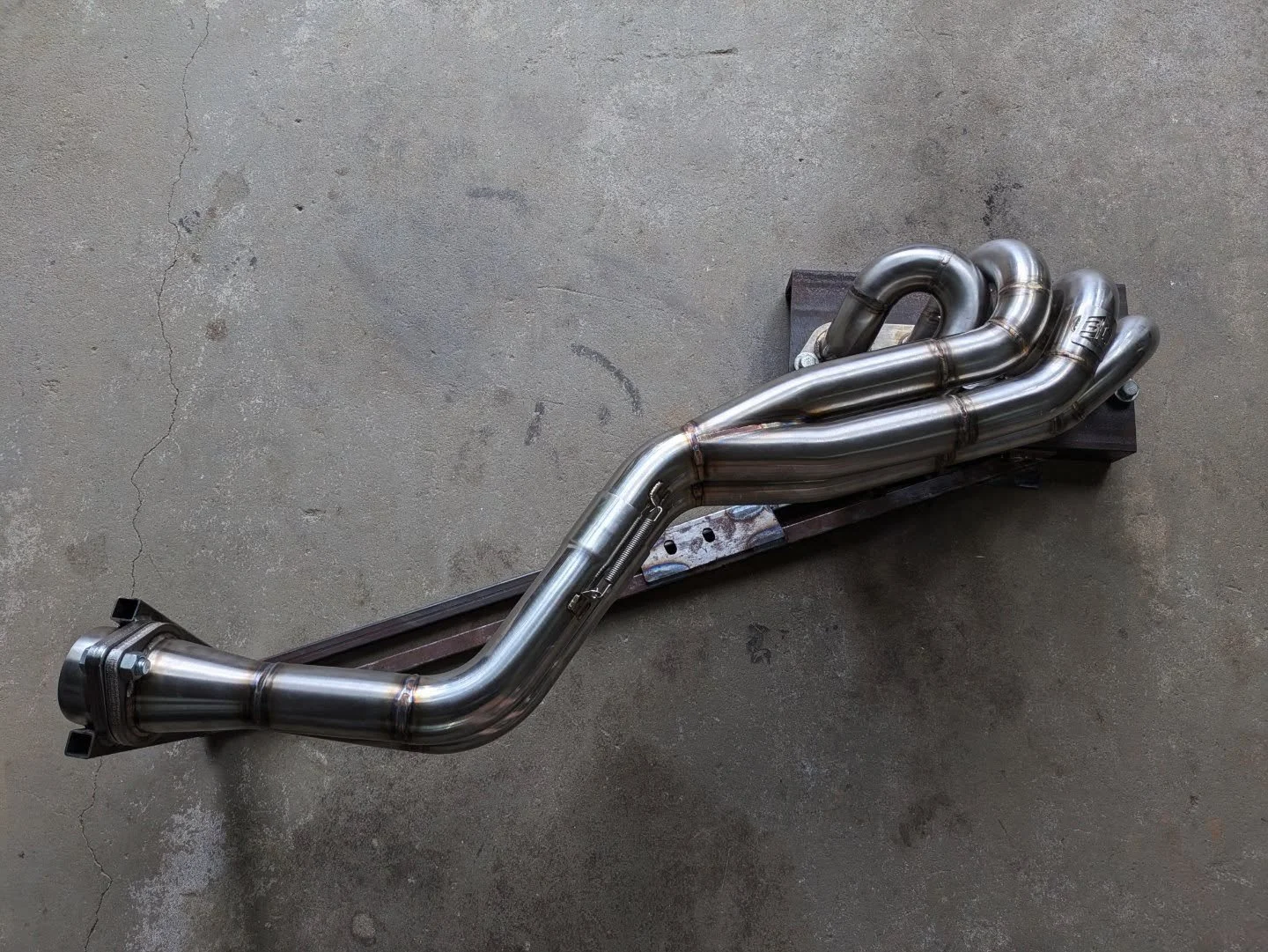
One of the main challenges of this engine swap was the exhaust manifold. Since no aftermarket solutions exist for this particular car, a custom manifold had to be designed and fabricated. With the engine fixed in place, it was once again 3D scanned with a concentration around the narrow path over the steering components and down to the bottom of the car. Using this information, an exhaust manifold was 3D modeled in Solidworks and a spreadsheet was created that itemized every section of stainless steel tubing with bend degree, centerline radius, and leg length. Band saw cutting jigs were designed and 3D printed to clock every tube at the required degree.
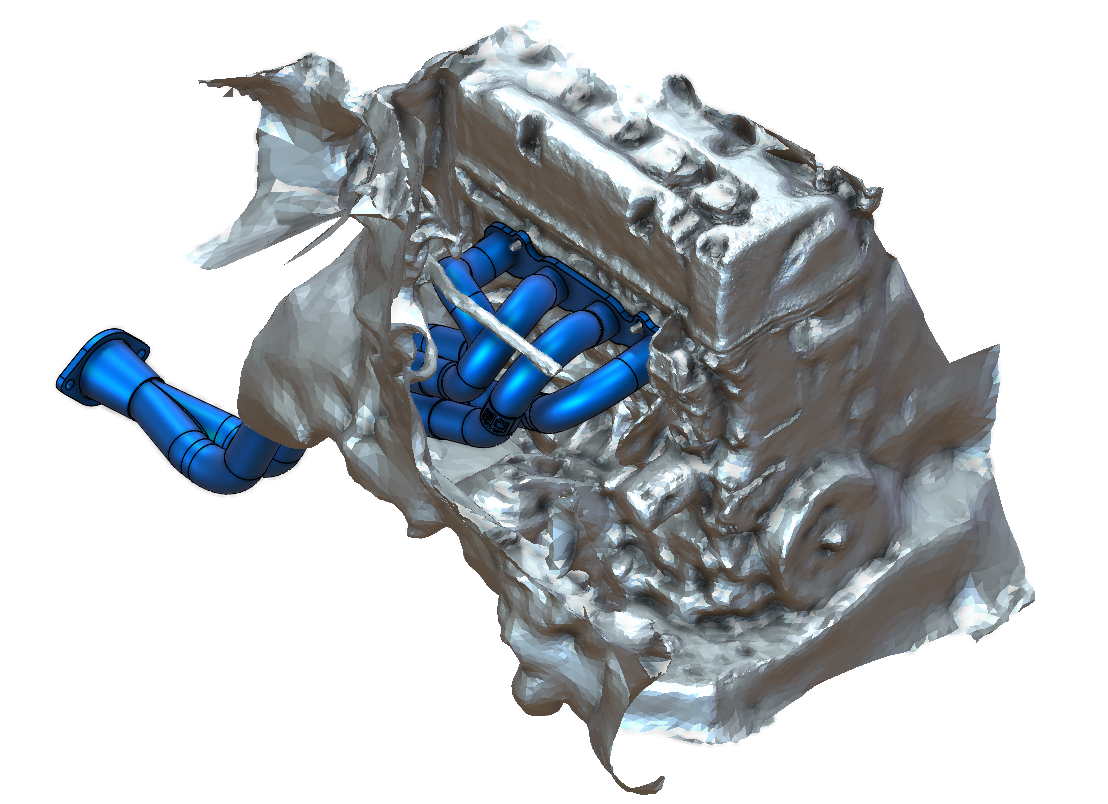
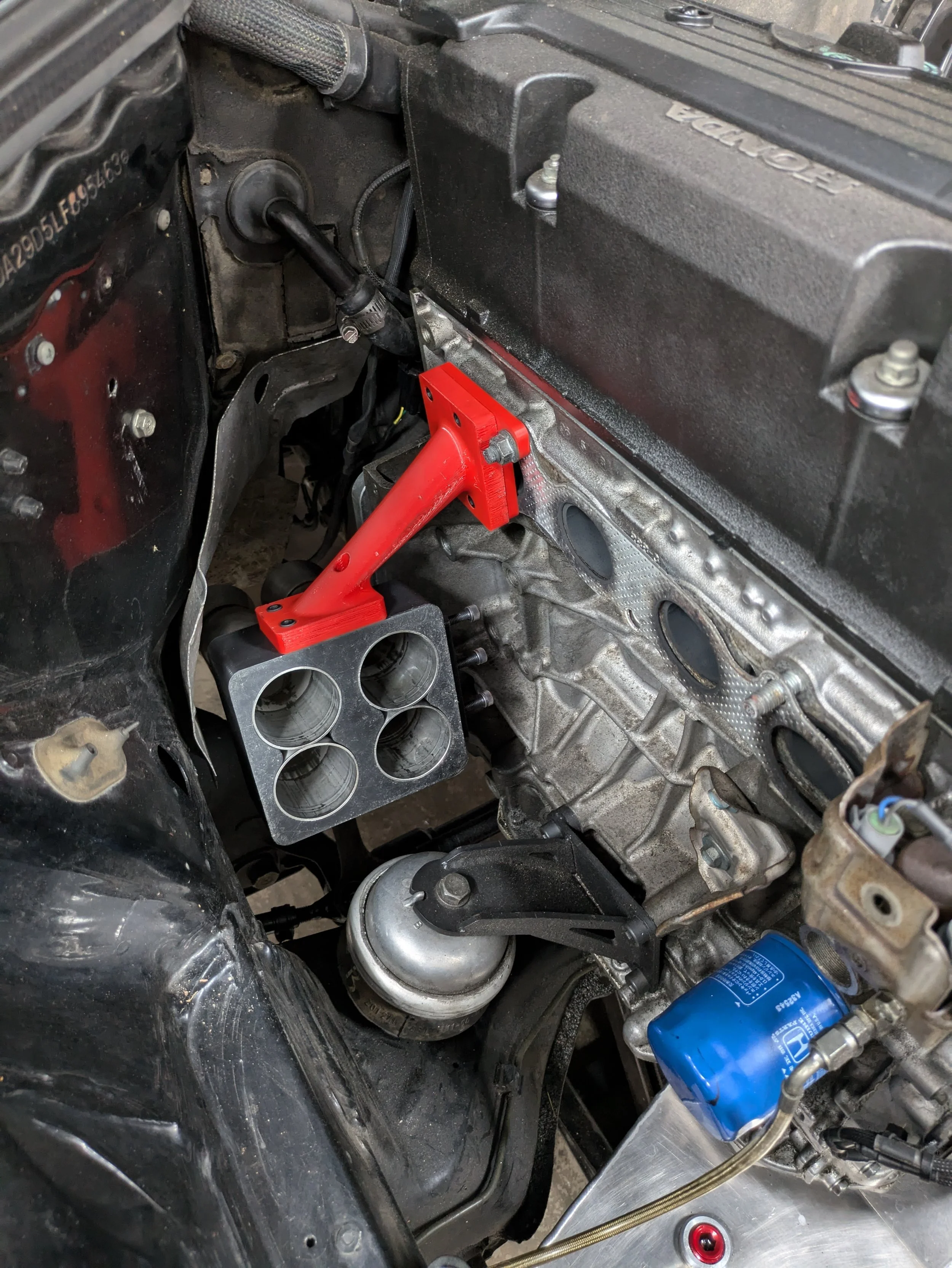
A jig to hold the 2-1 primary merge collectors was designed and 3D printed to locate them in space making sure they cleared all of the original Mercedes steering components.
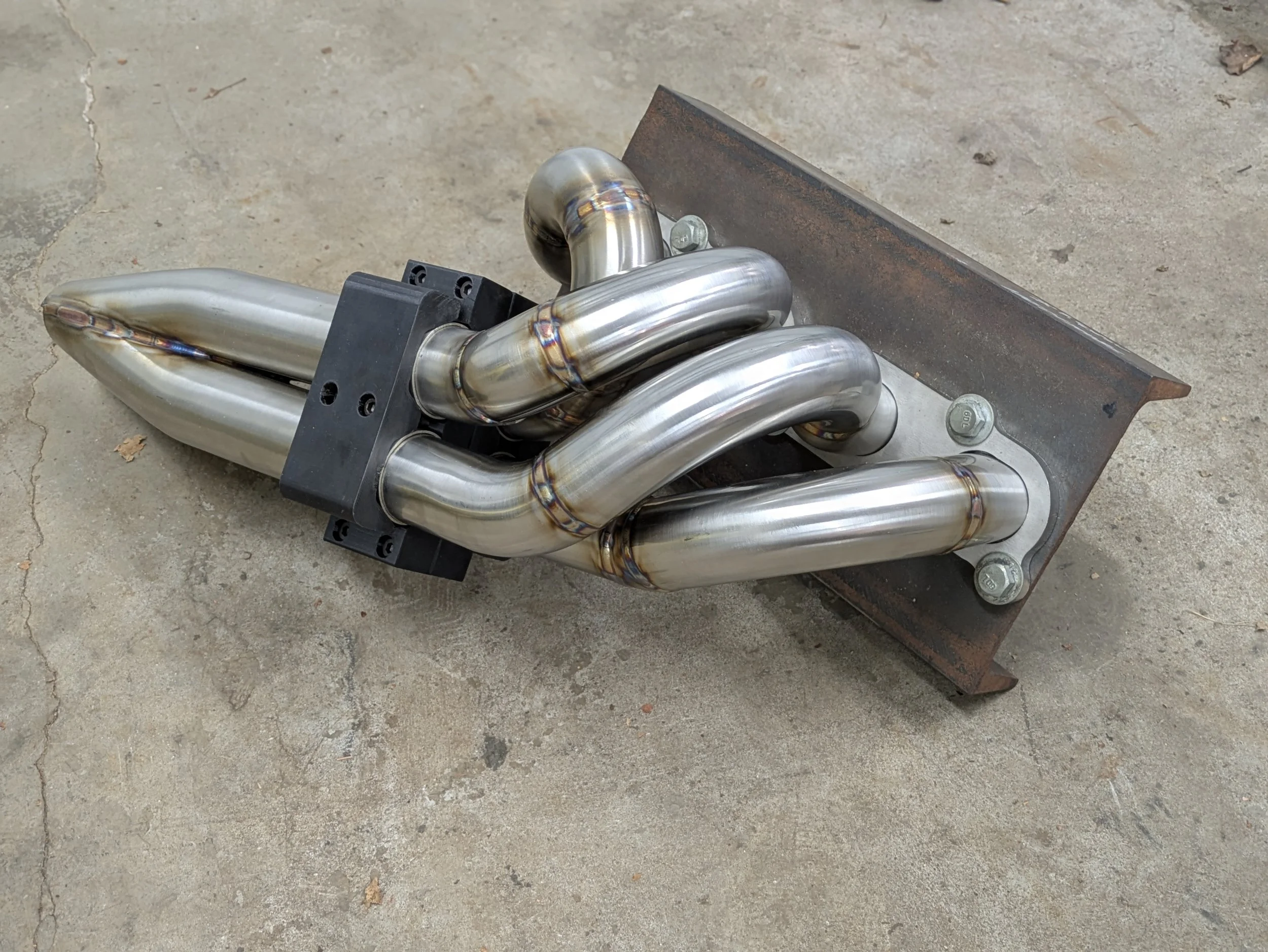
Once finalized, each runner was cut off of the exhaust flange and fully TIG welded. Each runner was back purged during the welding process. The rest of the exhaust system was then fabricated using 3” stainless tubing and v-bands for serviceability.
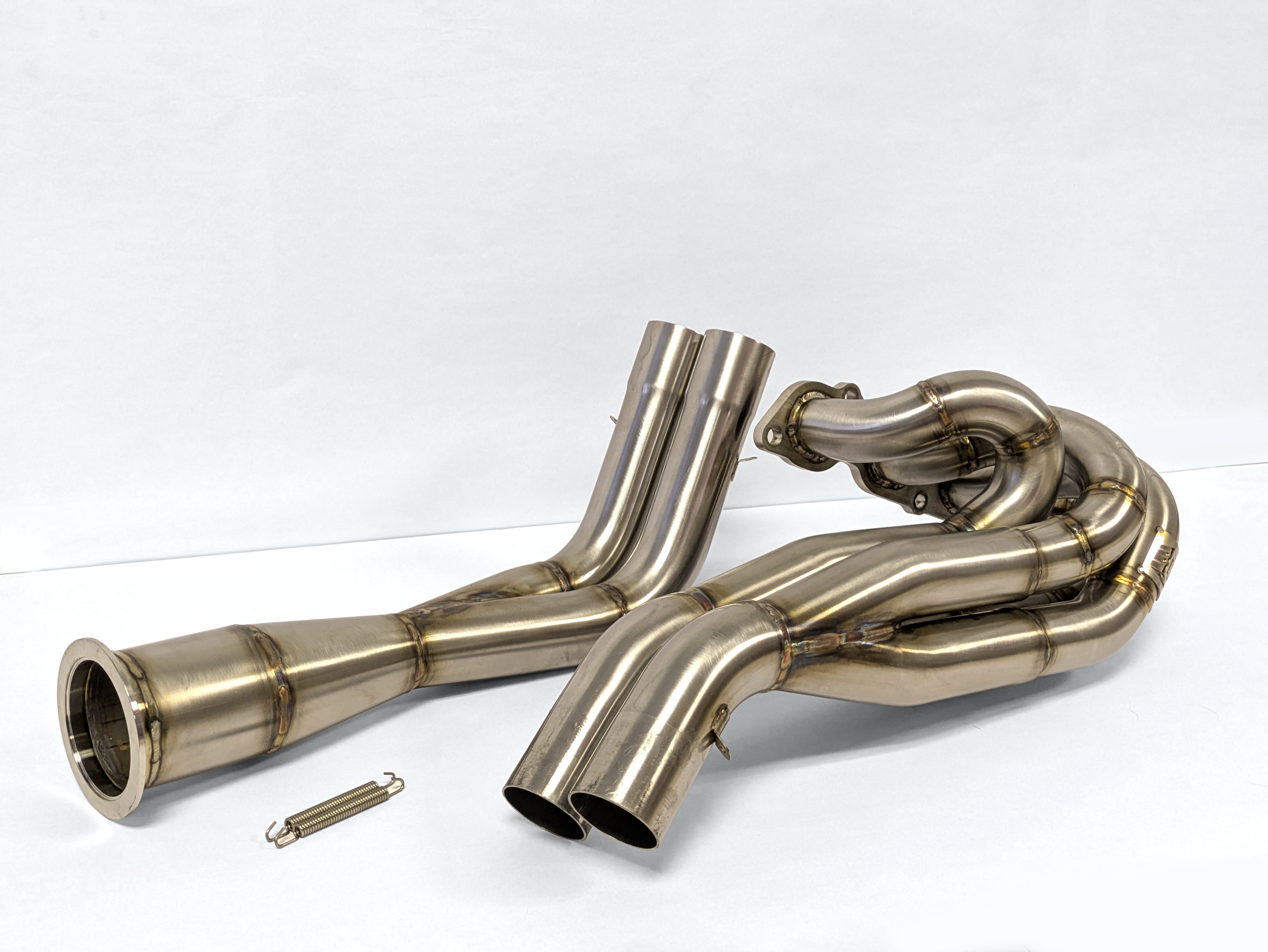
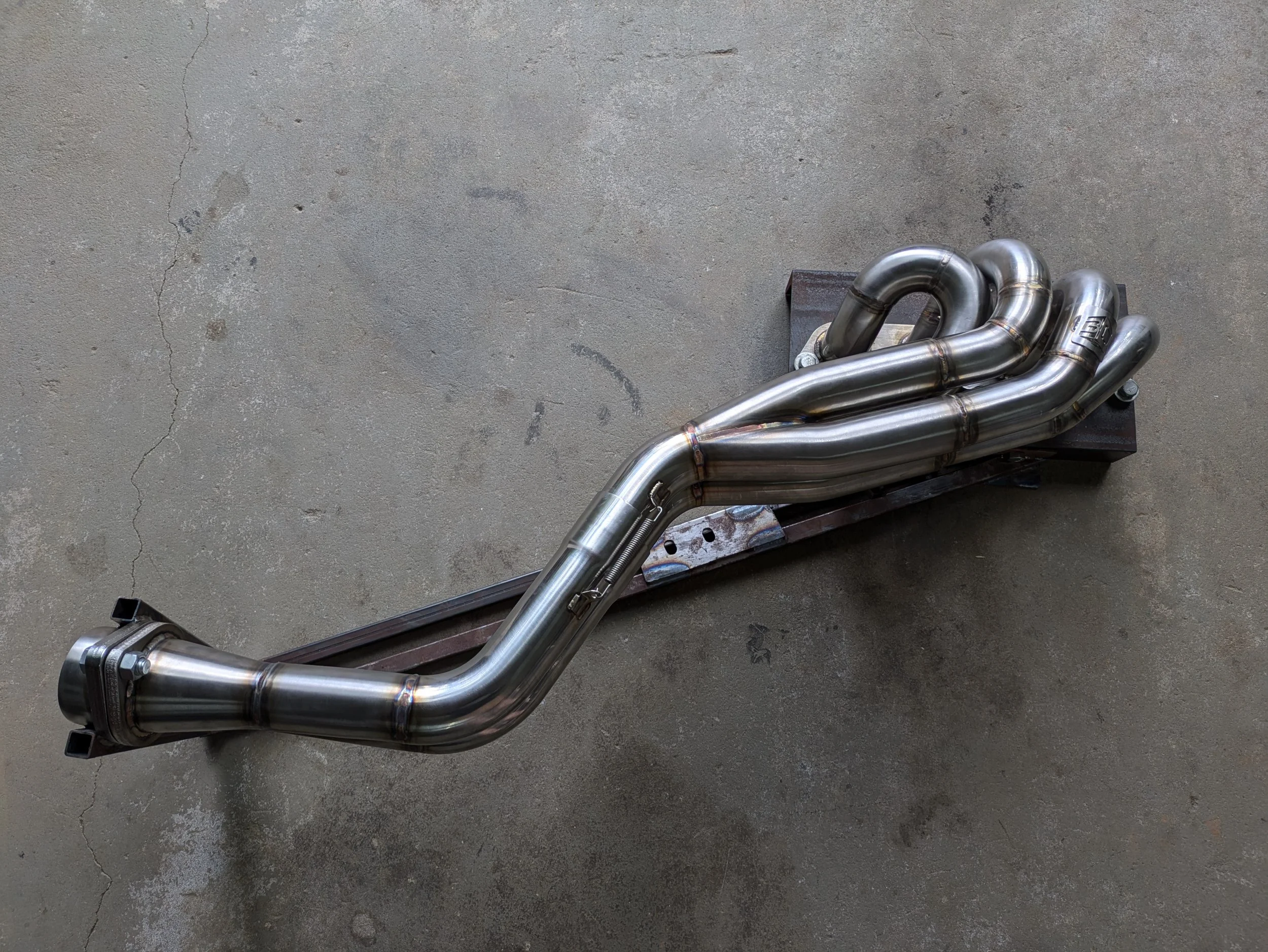
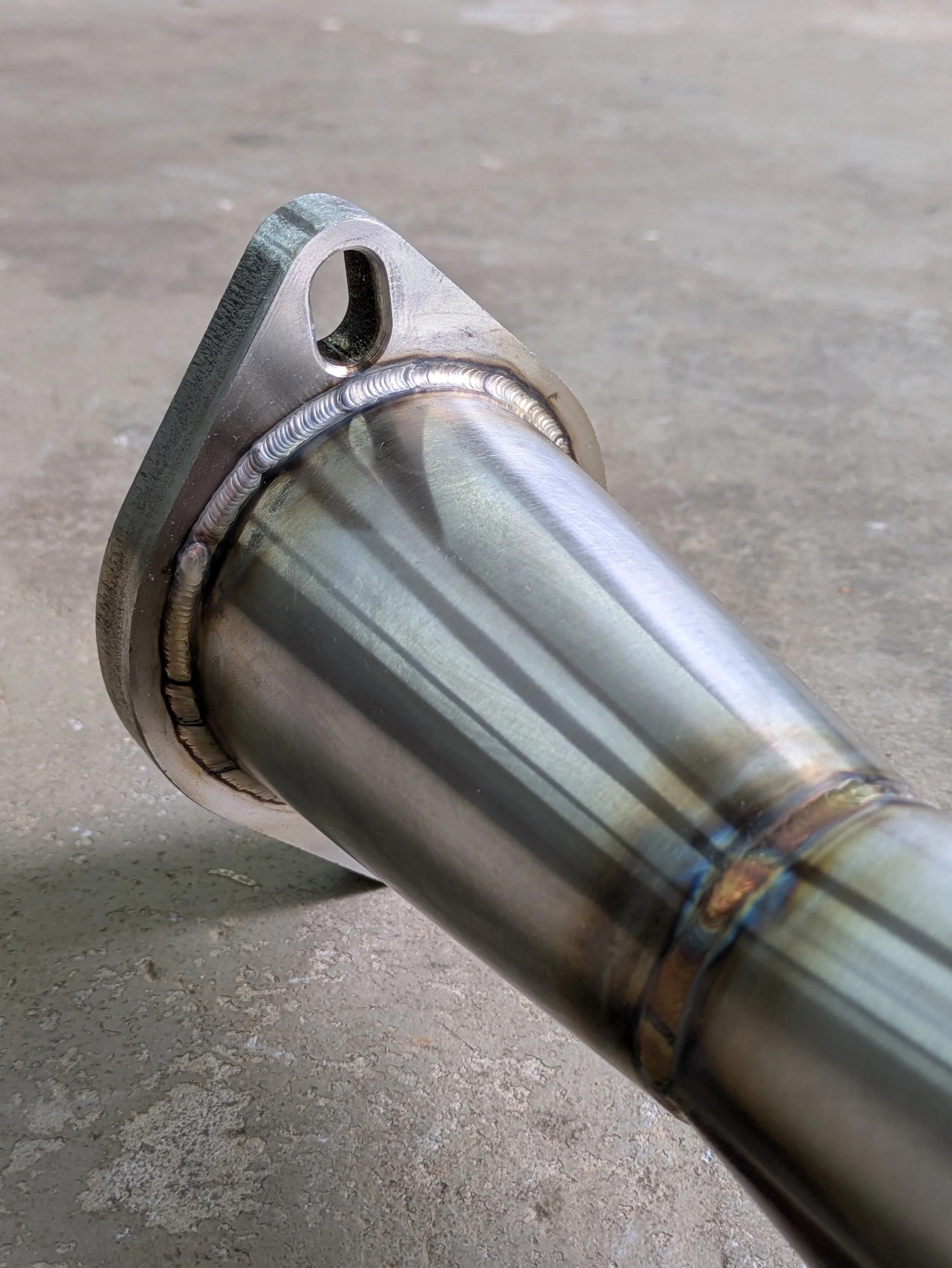
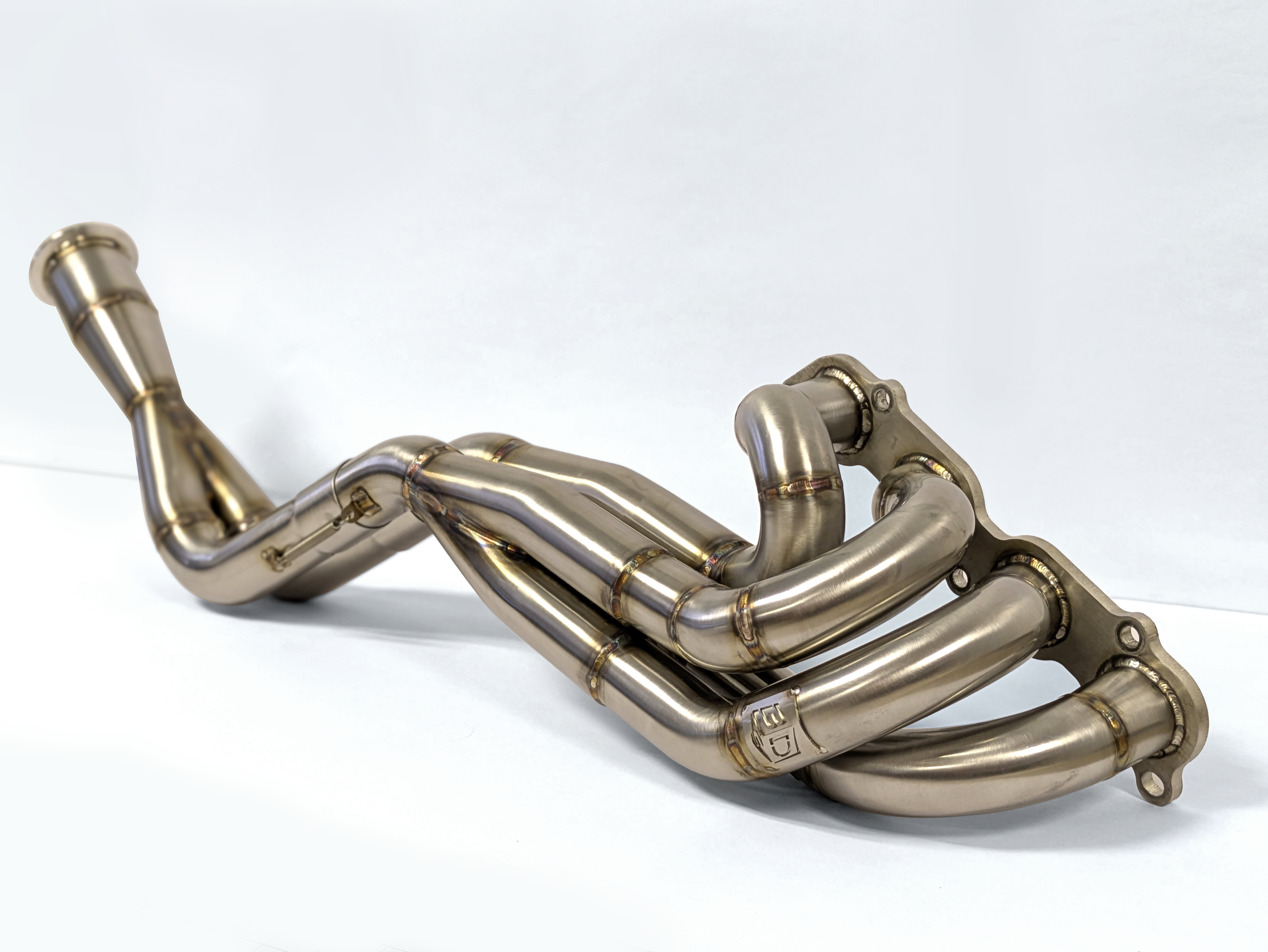
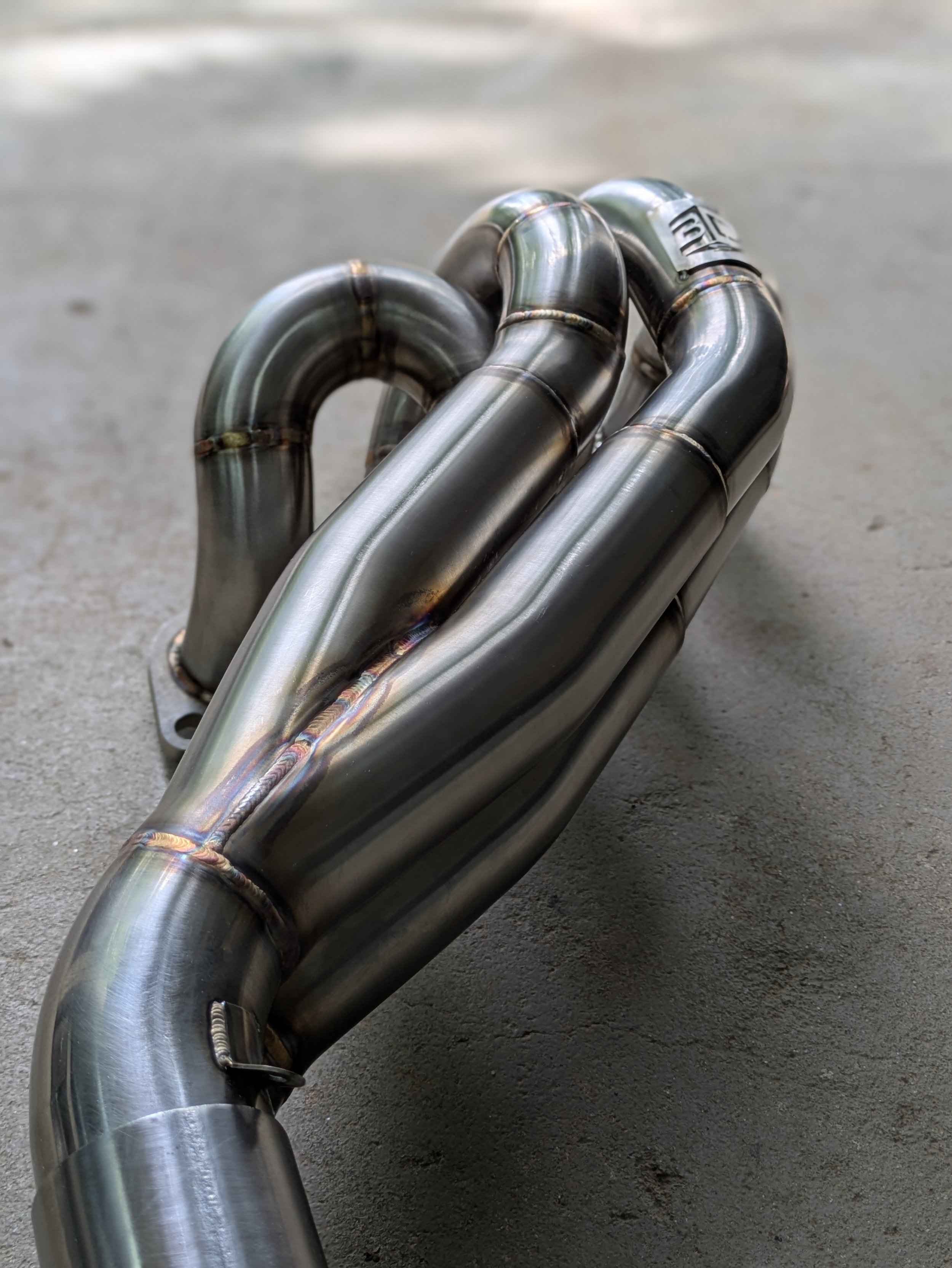
Revised header for production and sale
power steering pump
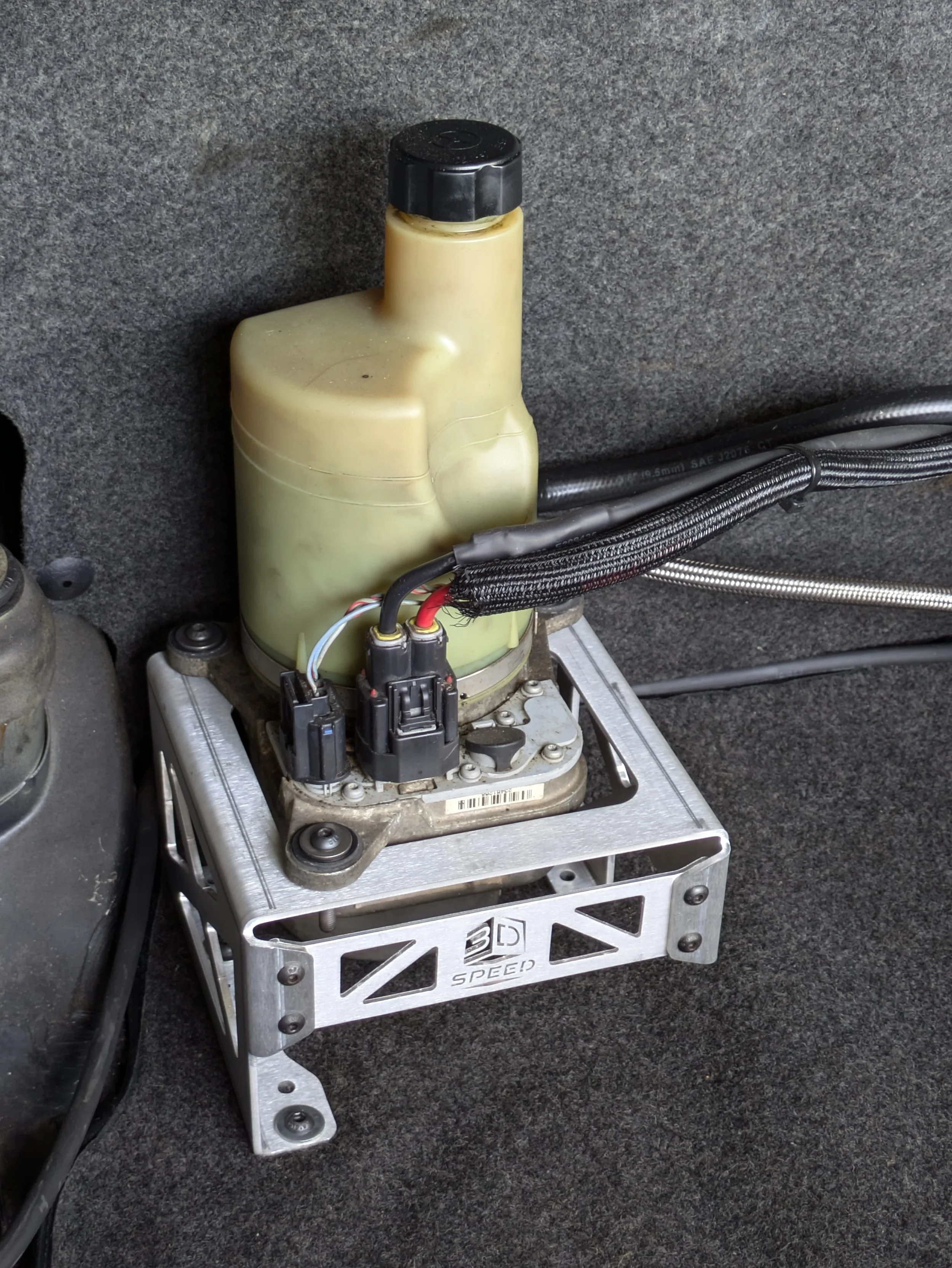
Since the original Mercedes engine-driven power steering pump was removed, the car was fitted with an electric power steering pump from a Volvo S60. The pump was mounted in the trunk for better weight distribution and more fluid capacity (heat management).
With the pump mocked up in place, it was 3D scanned along with the 190e trunk. A sheet metal mounting bracket was then 3D modeled and then manufactured by Send Cut Send.

fuel pump
The 190e was equipped with a Bosch CIS mechanical fuel injection system that uses complicated dual fuel pump setup. In order to simply this setup, a simple fuel pump and filter assembly was spec’d. The components were then 3D modeled and a mounting bracket was designed and created.


gauge cluster
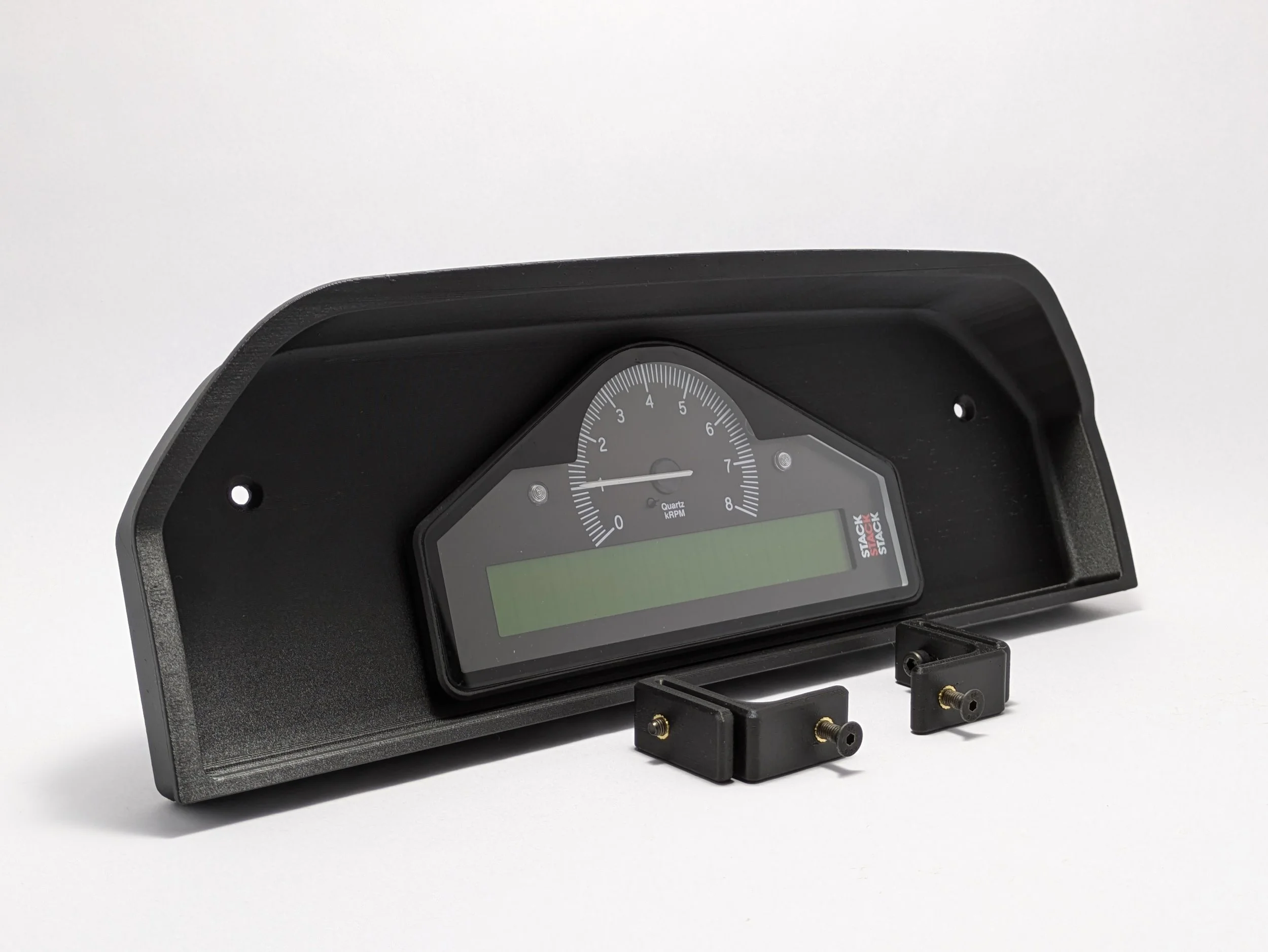
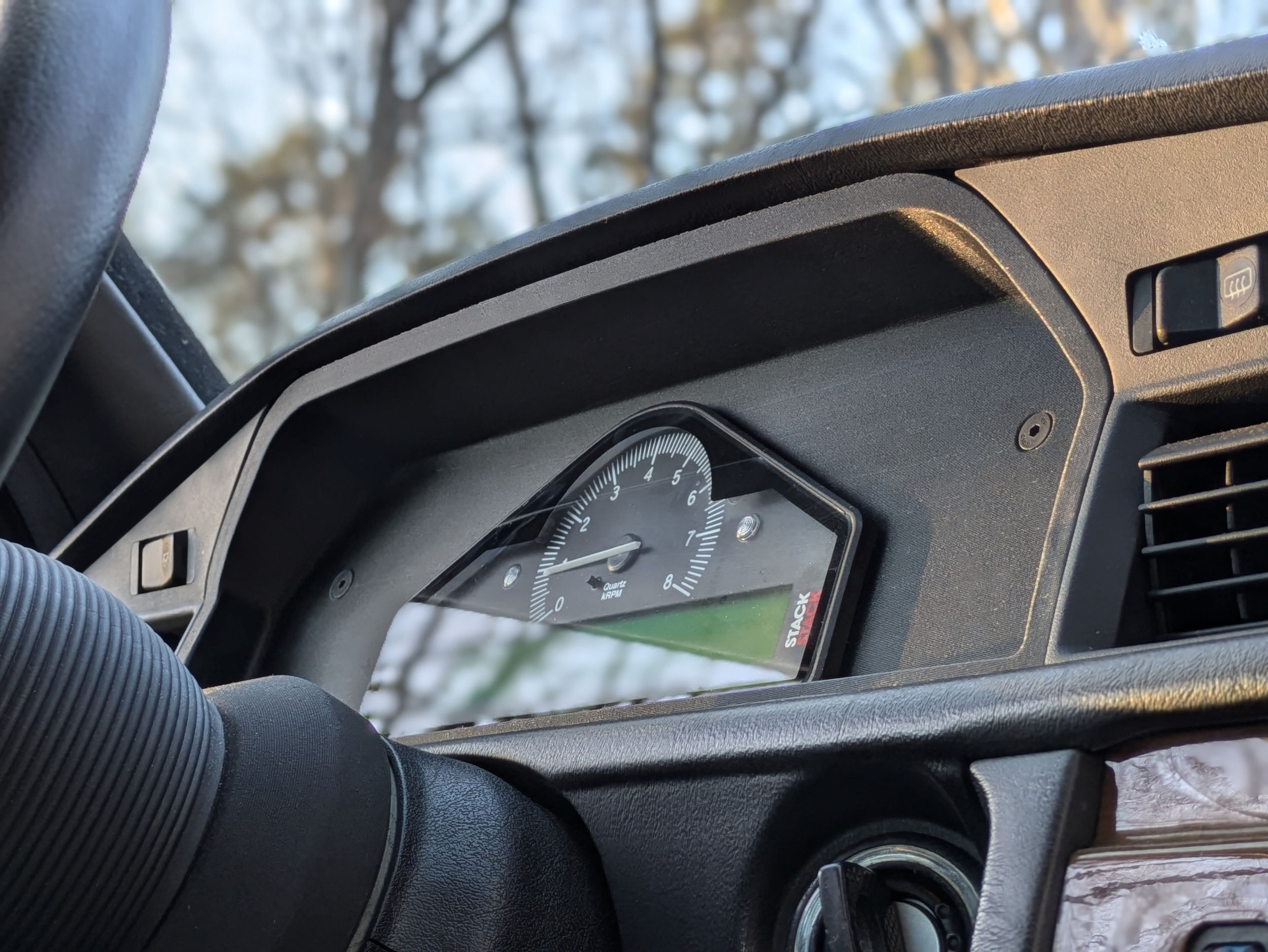
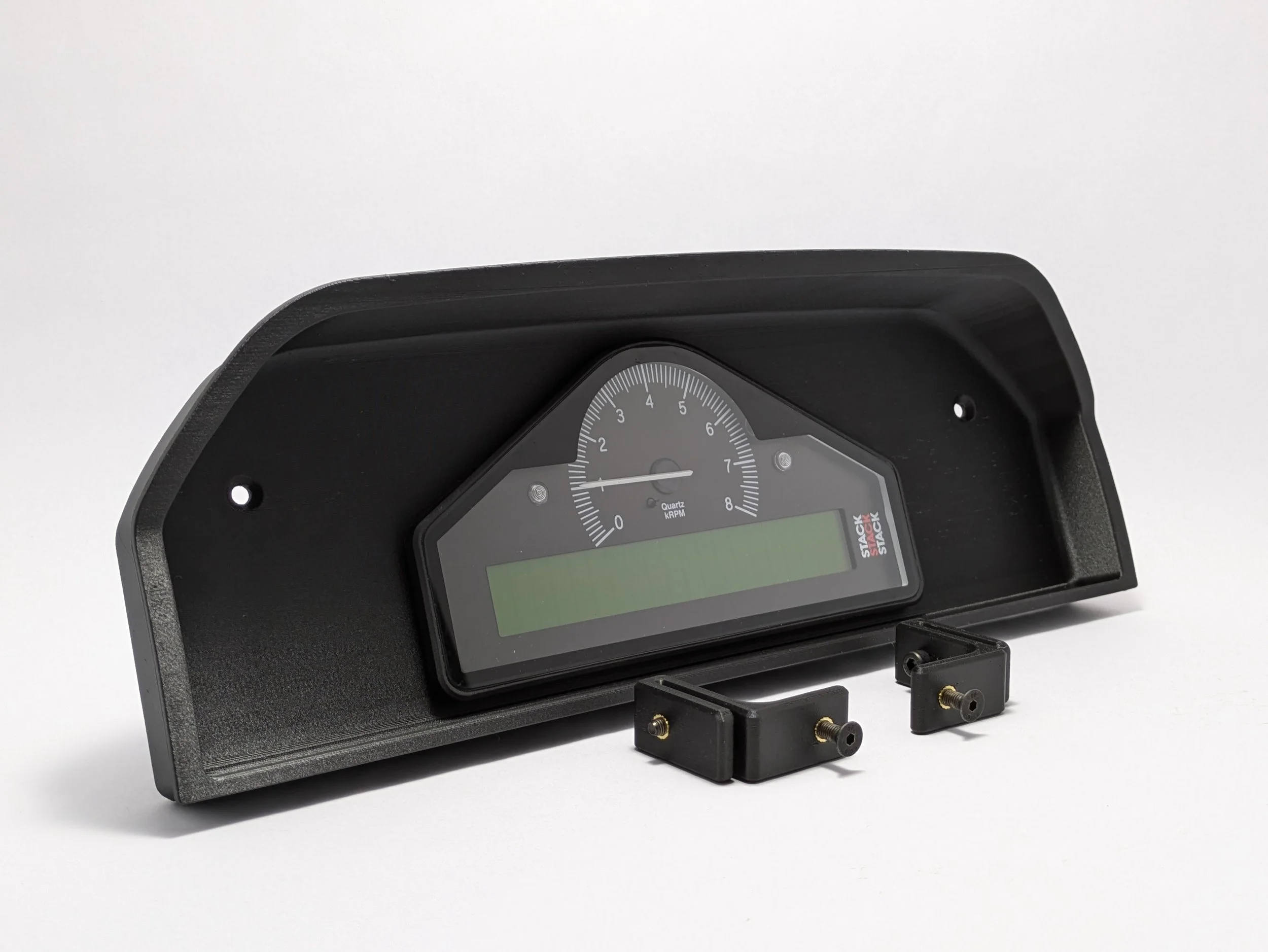
The factory Mercedes gauge cluster would be difficult to integrate with the new engine and ECU, so a gauge cluster from Stack took it’s place. The new gauge cluster has an analog sweeping tachometer that harkens back to the days of 90’s DTM and also displays critical engine information such as water temp, oil temp, oil pressure, speed, and more.
The original gauge cluster was removed, 3D scanned, and a bezel that would replace the gauge cluster was 3D modeled and 3D printed out of PETG-CF. Some mounting provisions were designed to clamp onto the original sheet metal tabs in the dash so it could be secured without any modifications.
dyno tuning
Once the drivetrain components were completed, the car was strapped to a dyno and tuned. It made a respectable 222hp at the rear wheels (~250hp at the crank) and the redline was set to 8,000rpm. Compared to what the car was like to drive originally, the new engine setup carries much more of the 90’s DTM spirit and is an absolute blast to drive.

NISSAN R200 DIFFERENTIAL CONVERSION
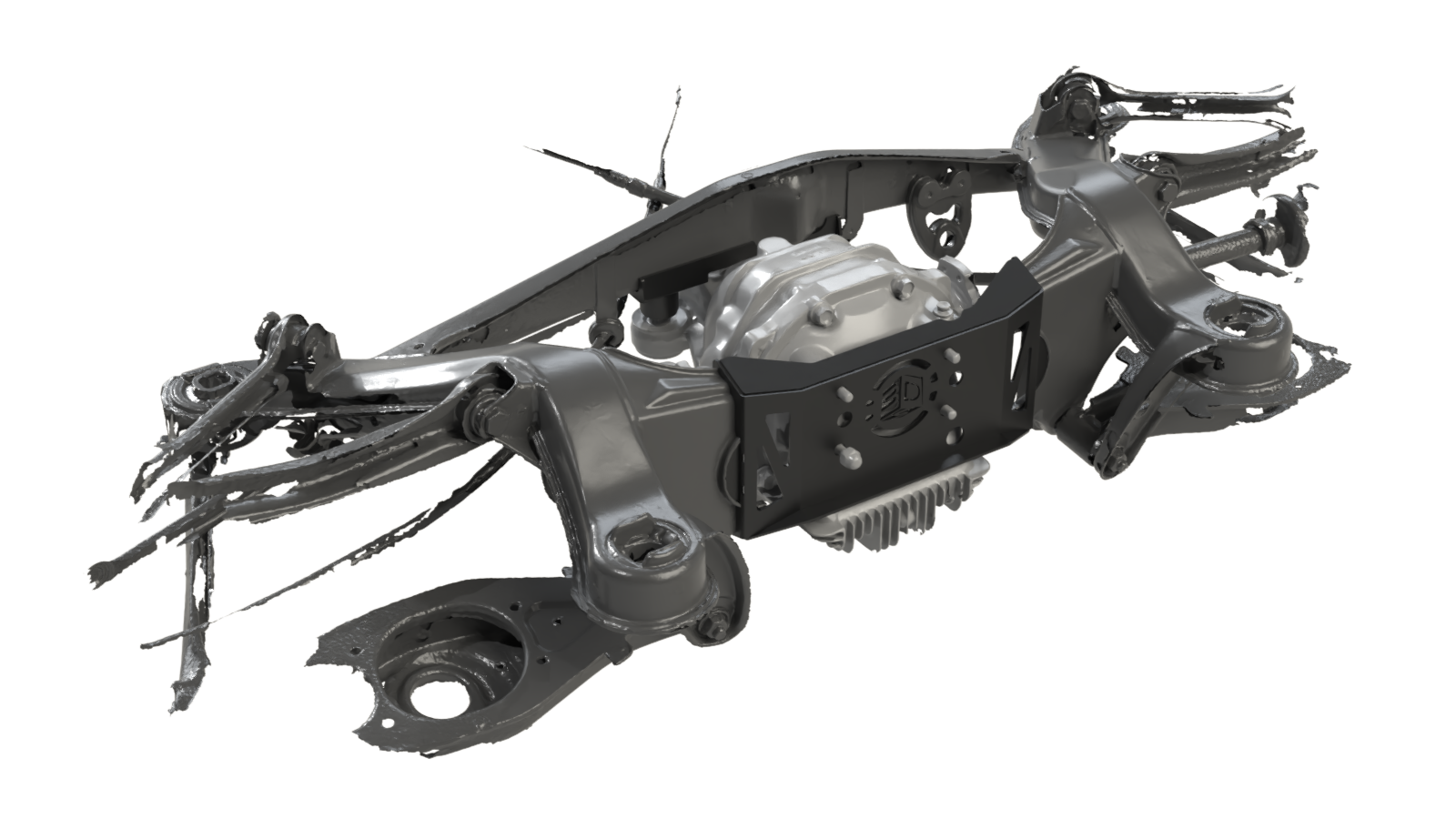
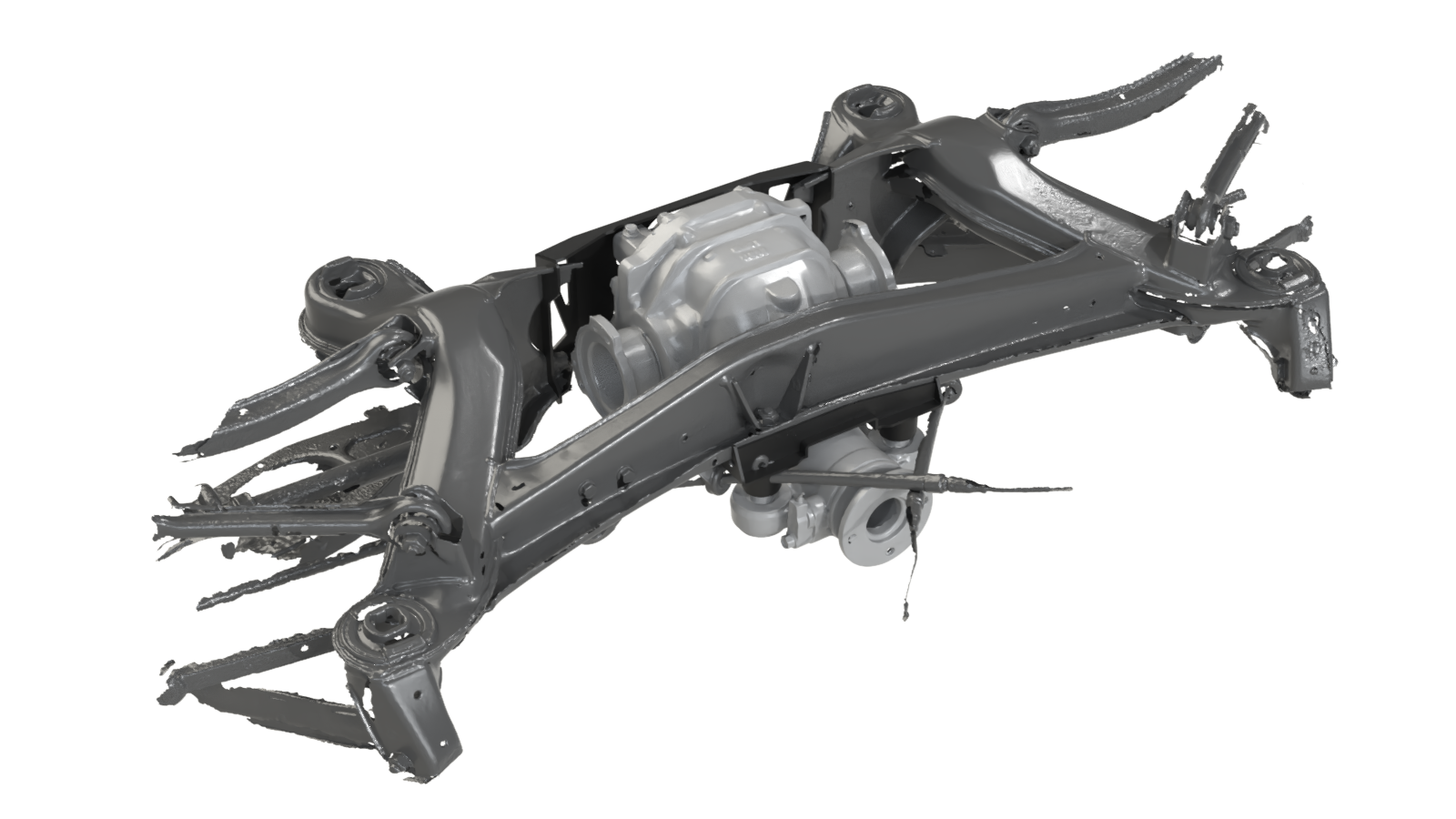
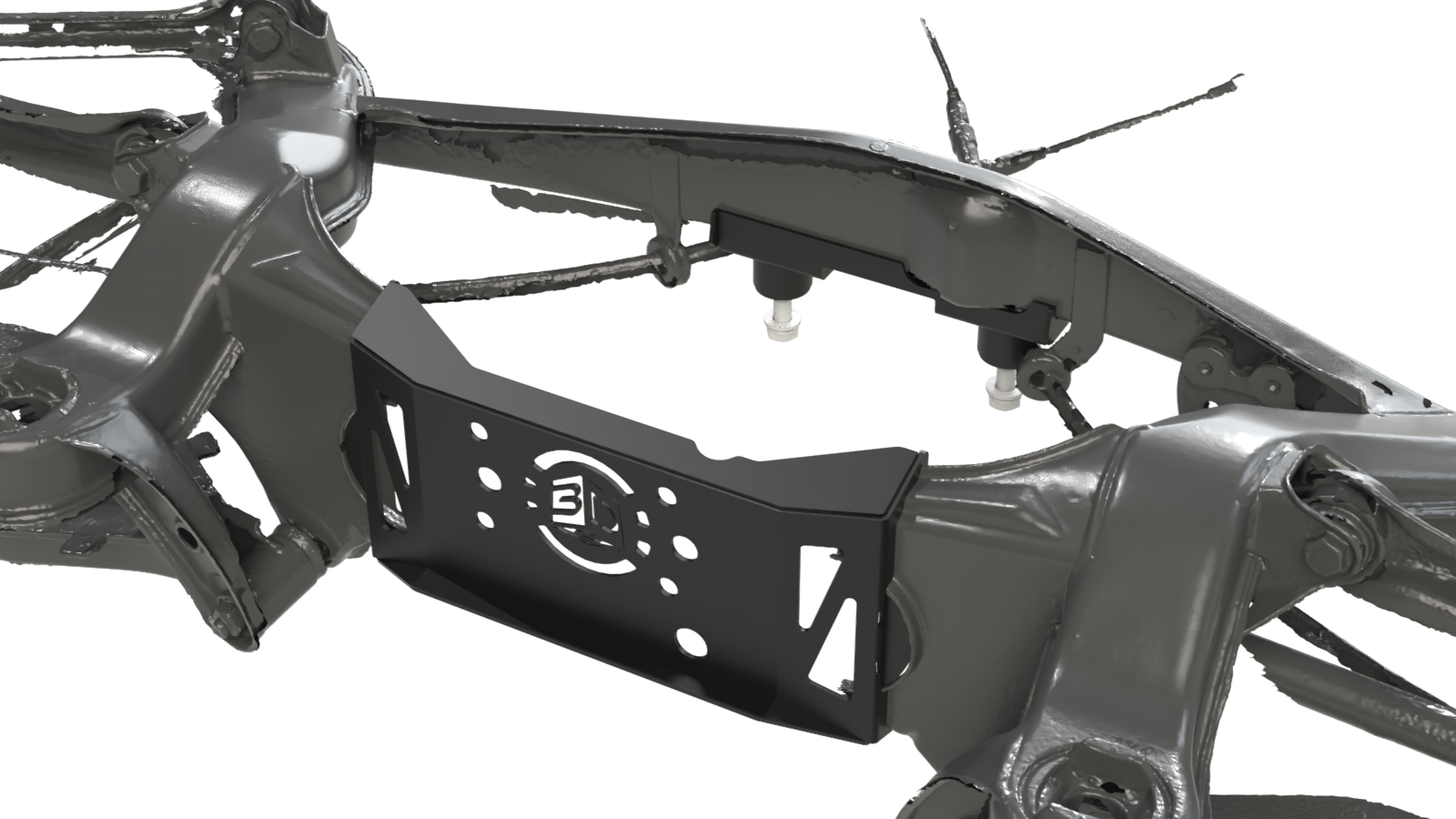
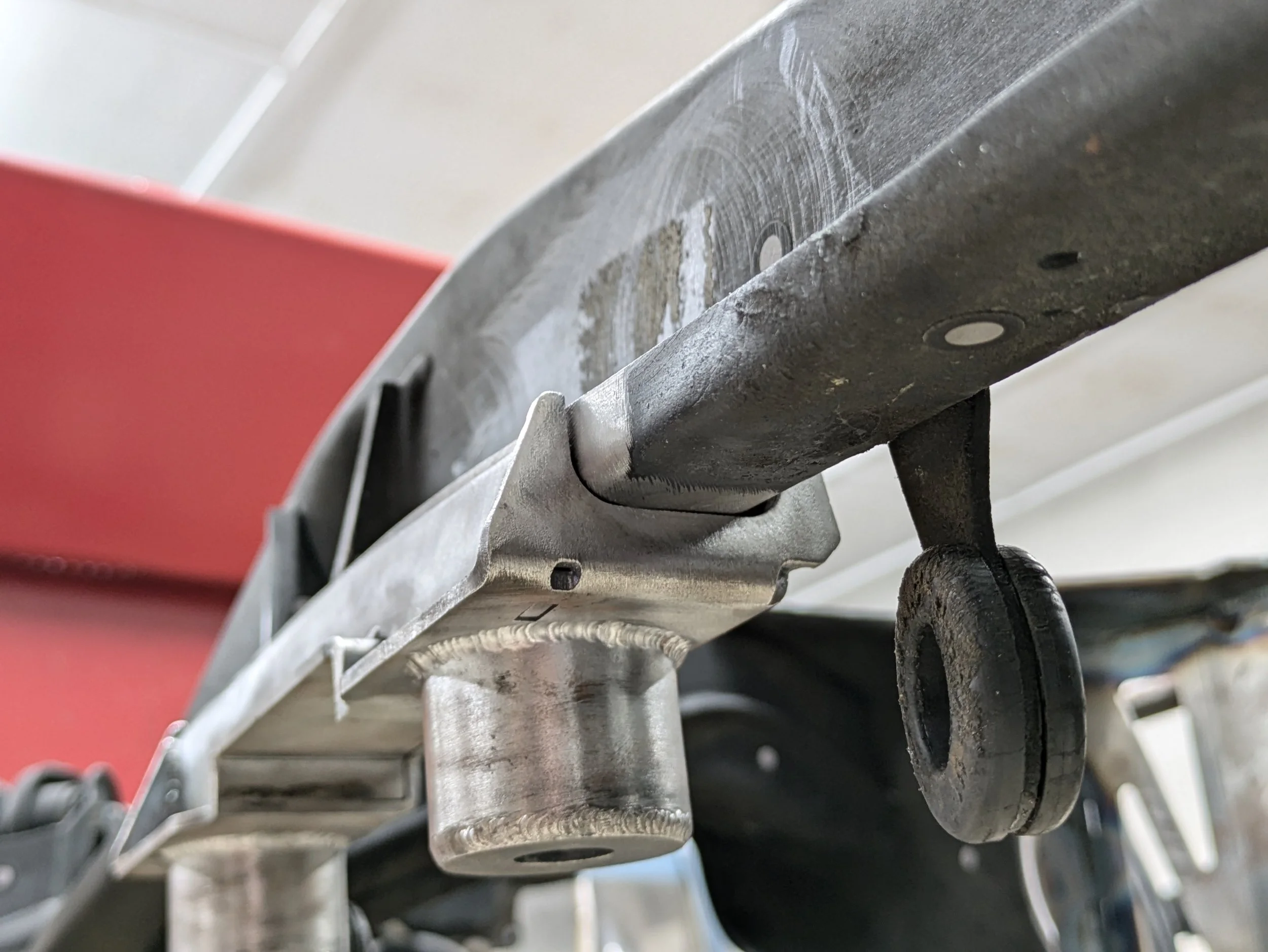
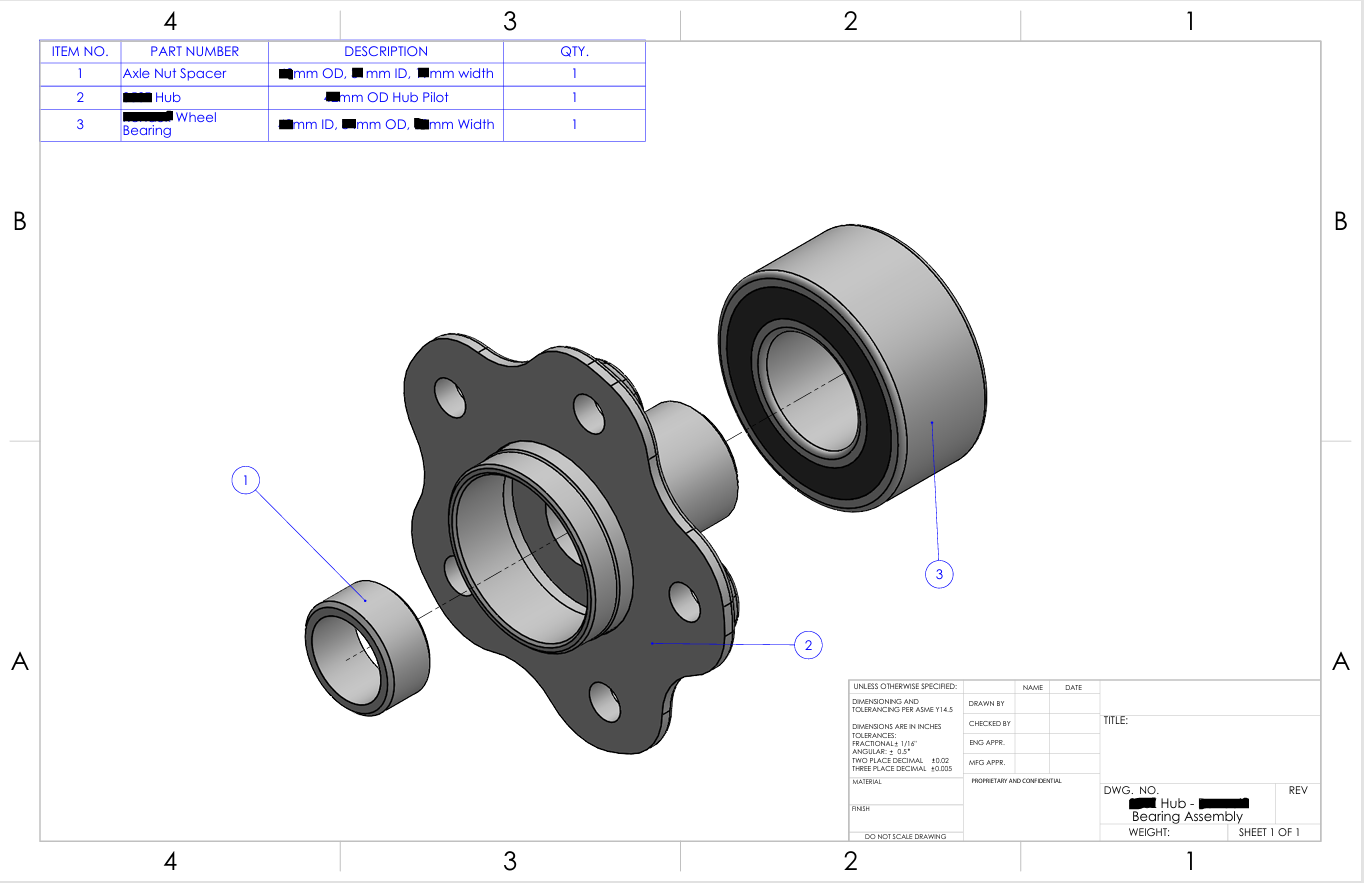
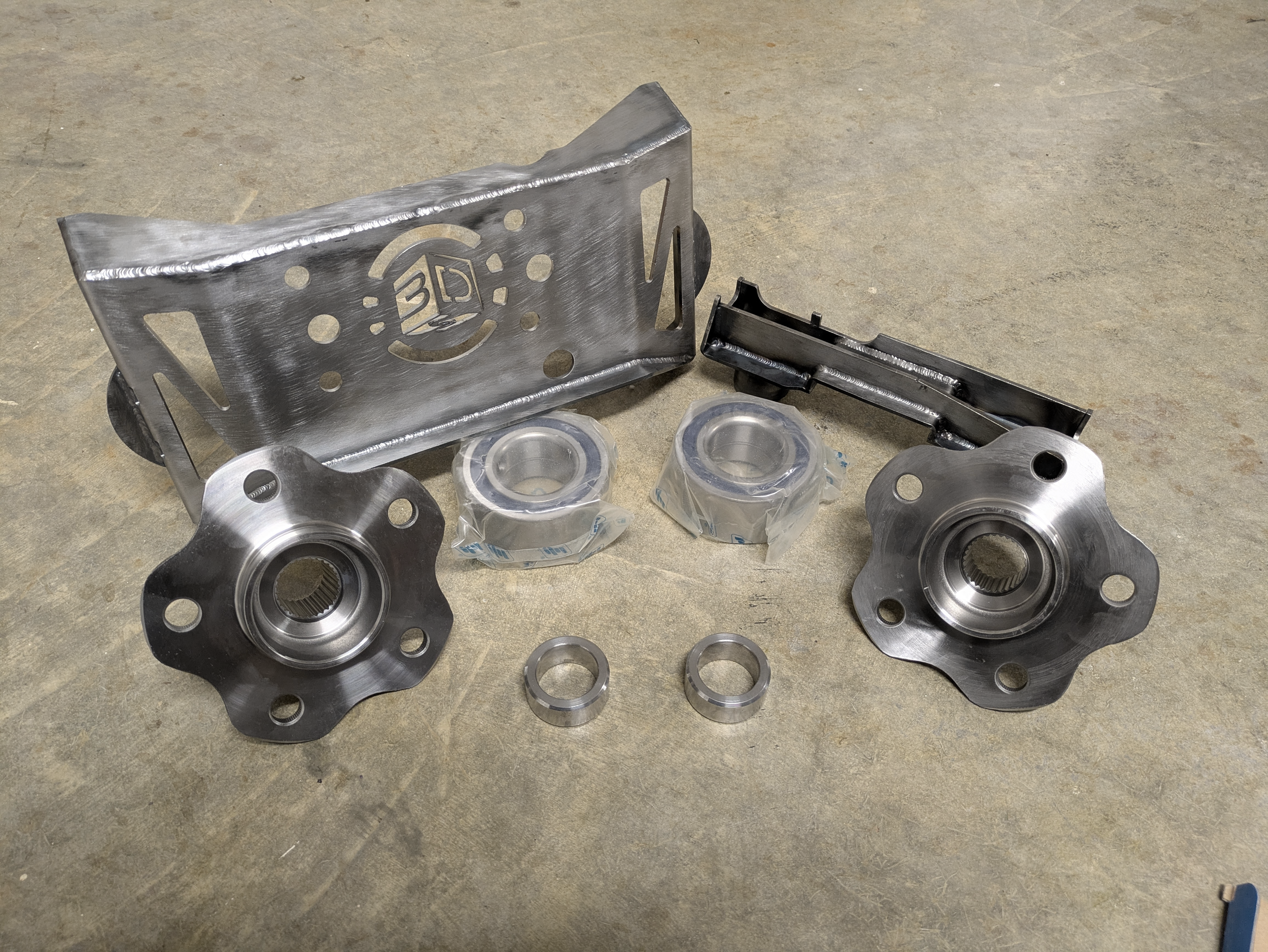
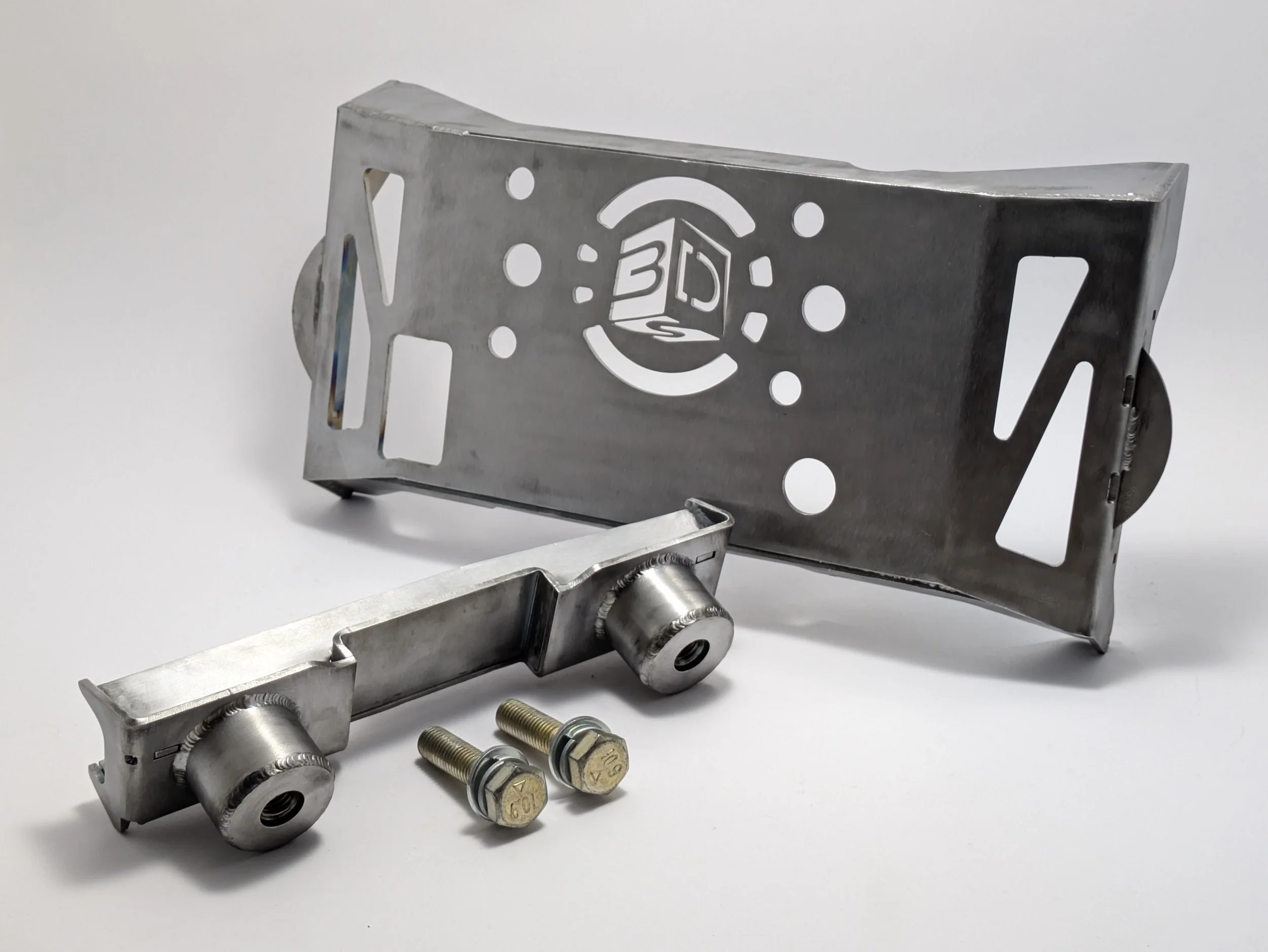
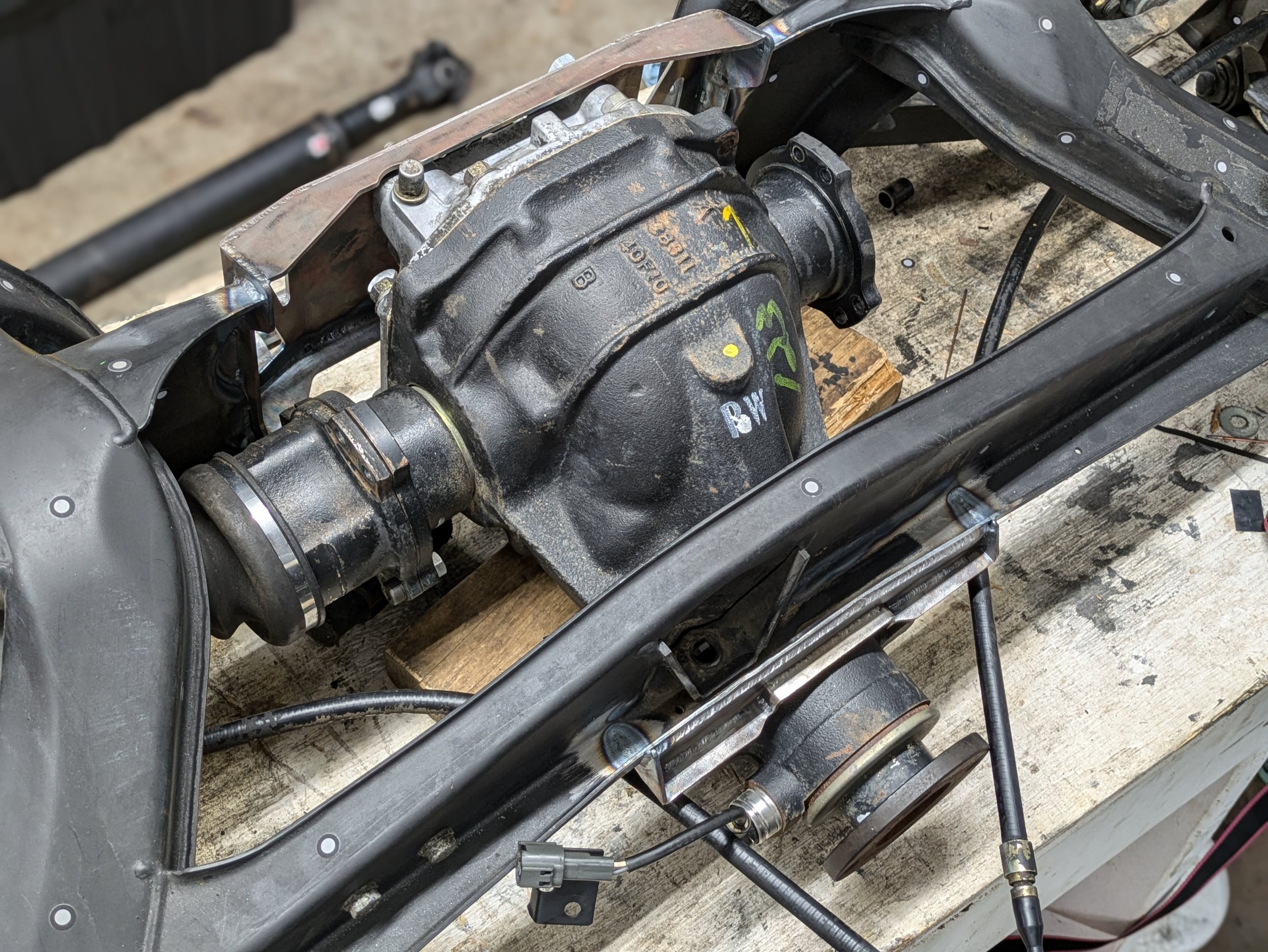
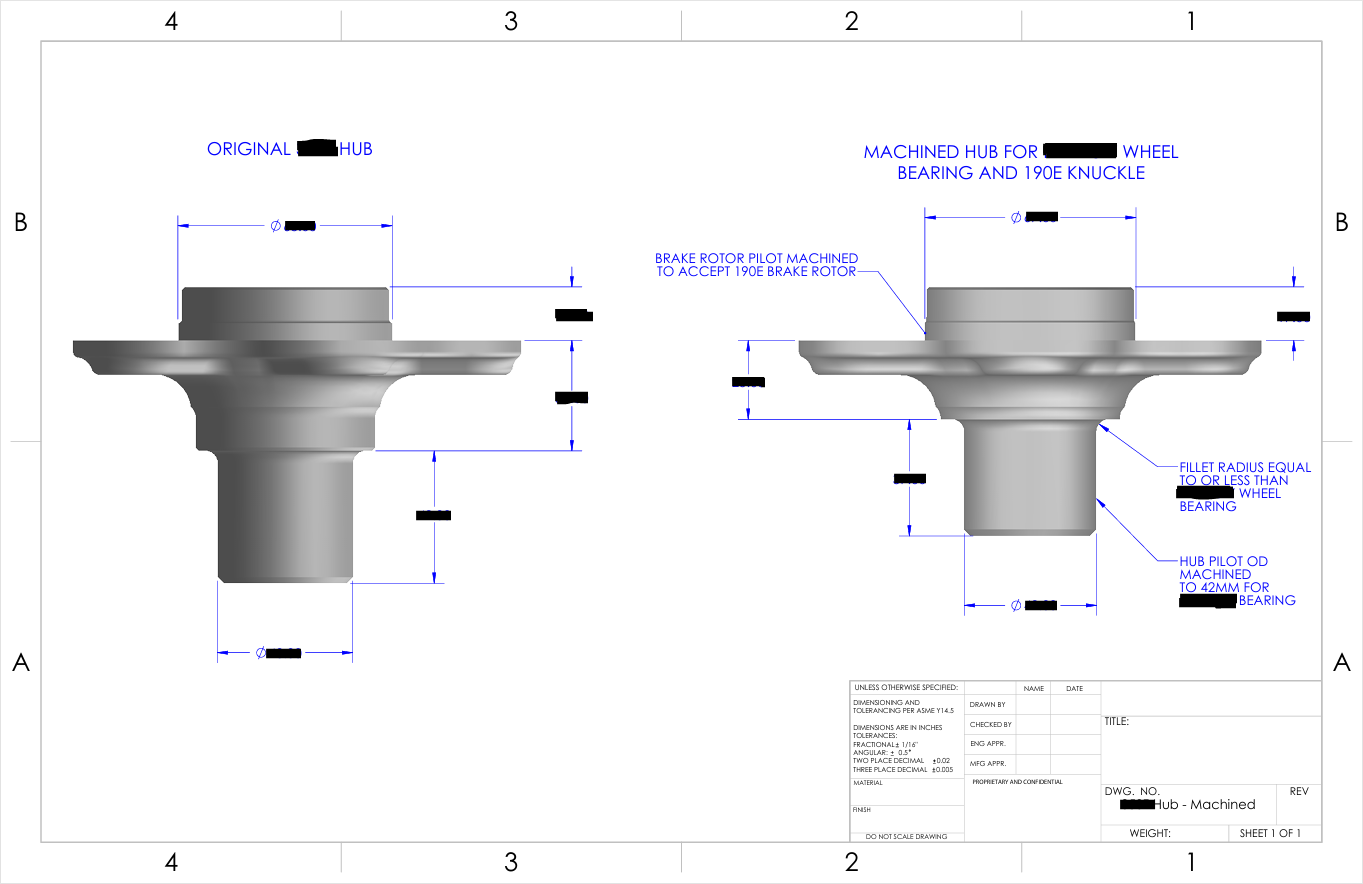
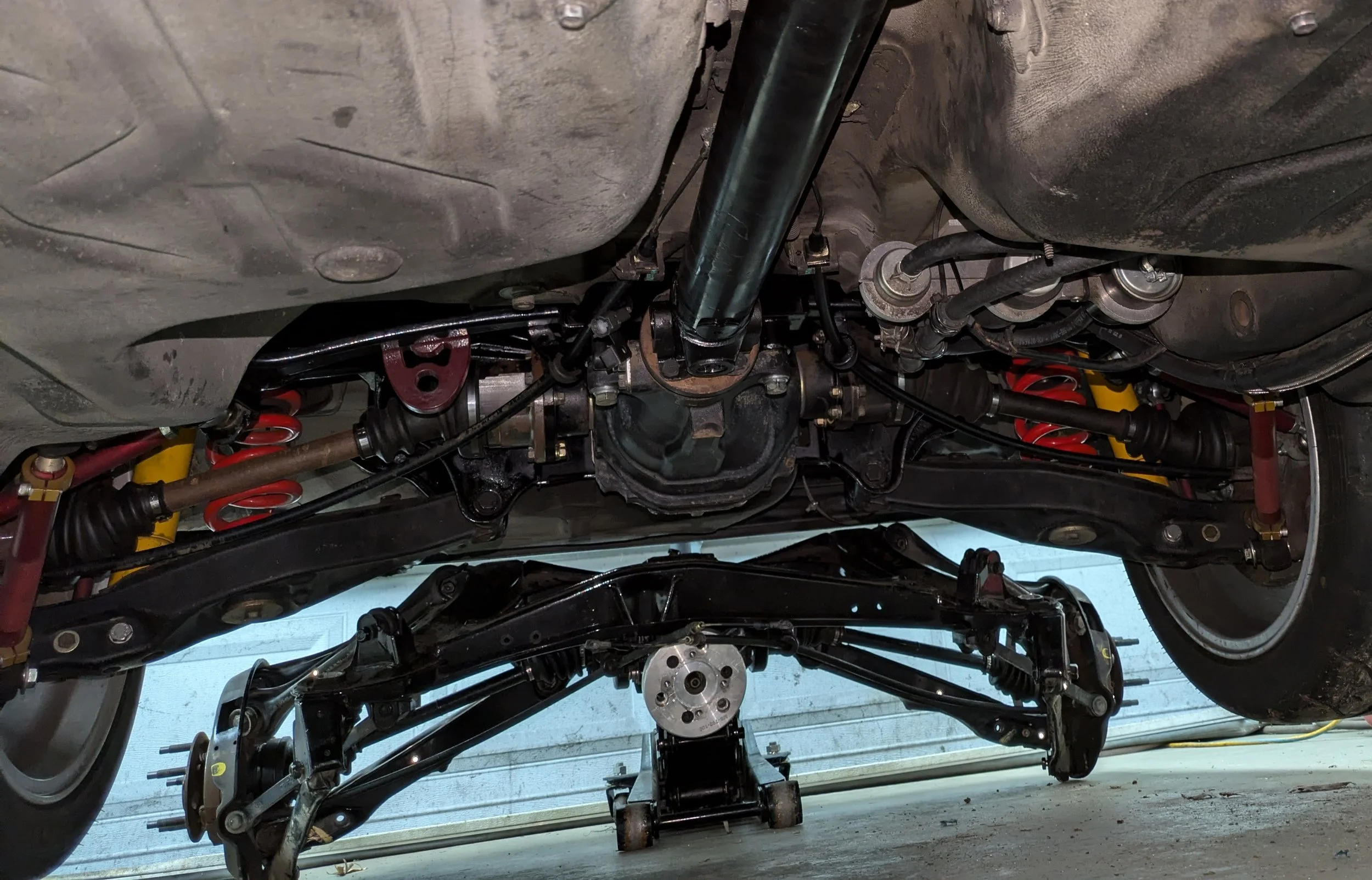
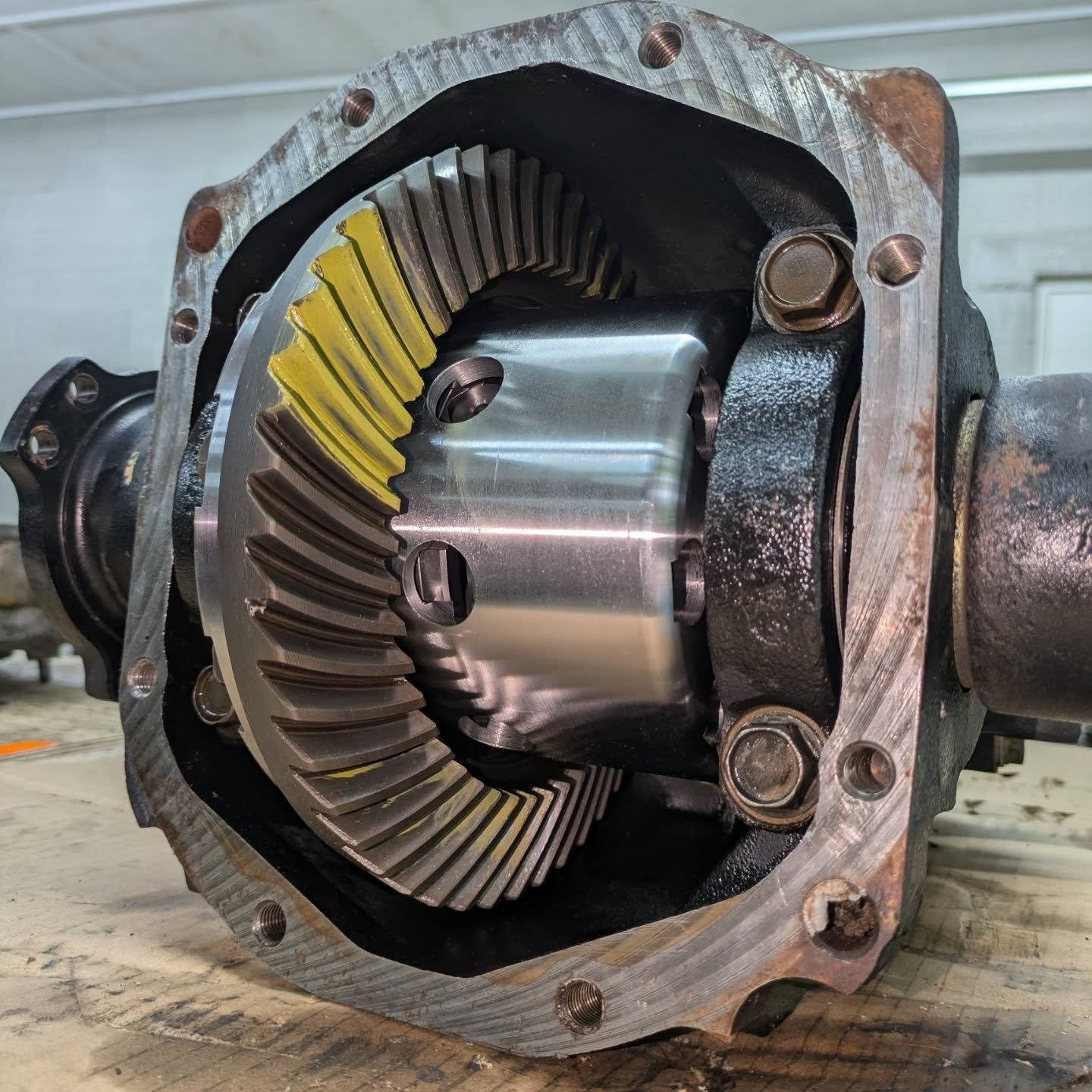
The stock 190e differential is more than capable of handling the torque of a NA K24, however, the LSD and gear ratio options are limited and expensive. Nissan R200 differentials are cheap, have huge aftermarket support, and are known to be able to take some abuse, so it seemed like a good option for a replacement. With a junkyard 190e subframe and a locally sourced R200 from a 240sx on hand, 3D scans were taken and the components were married in CAD with some sheet metal components. Nissan hubs were machined to fit some alternative wheel bearings which allowed the use of two stock driver side 240sx axles and the stock 190e knuckles, calipers, and rotors.
BMW S65 Individual throttle body CONVERSION
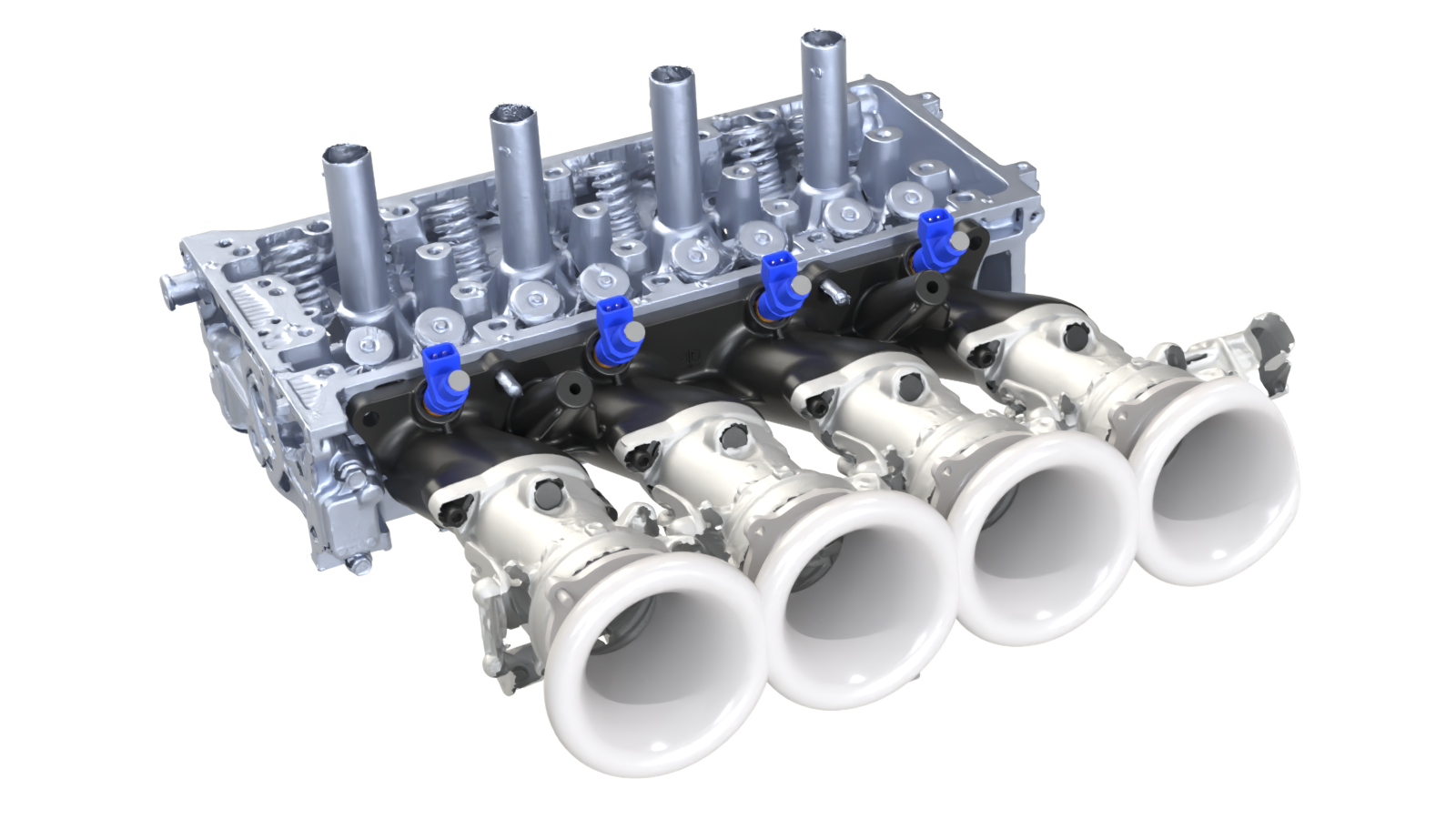
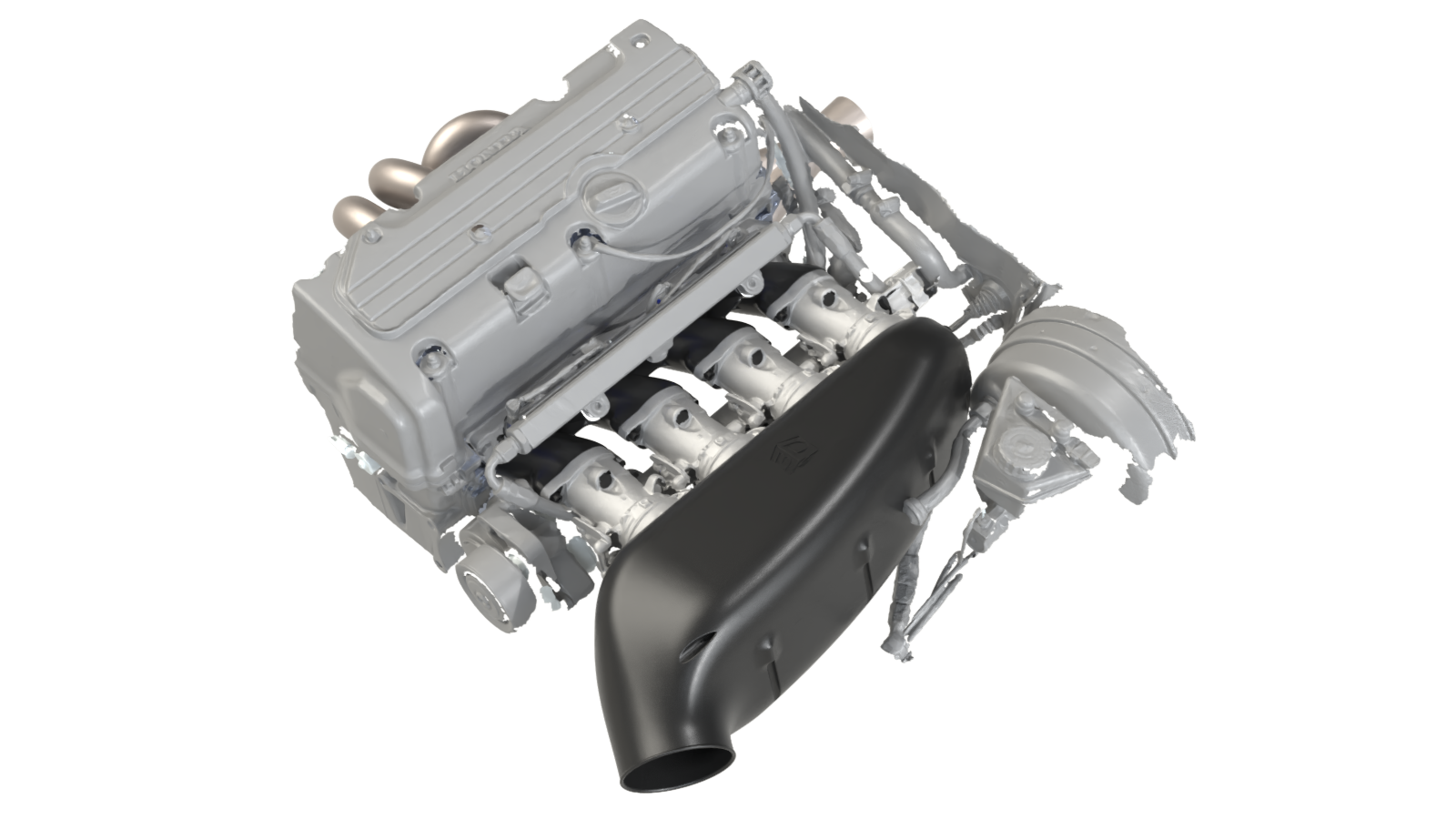
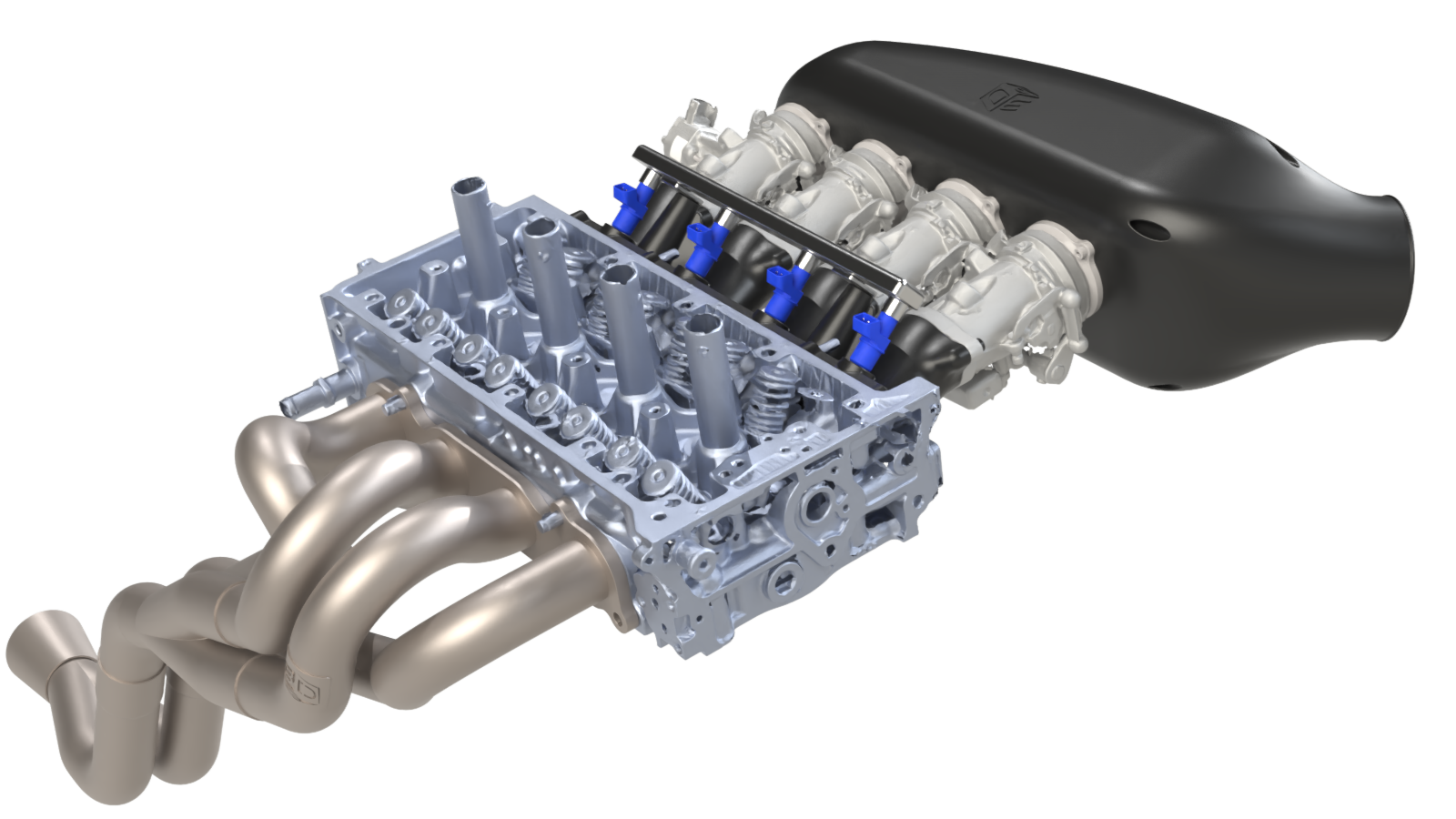
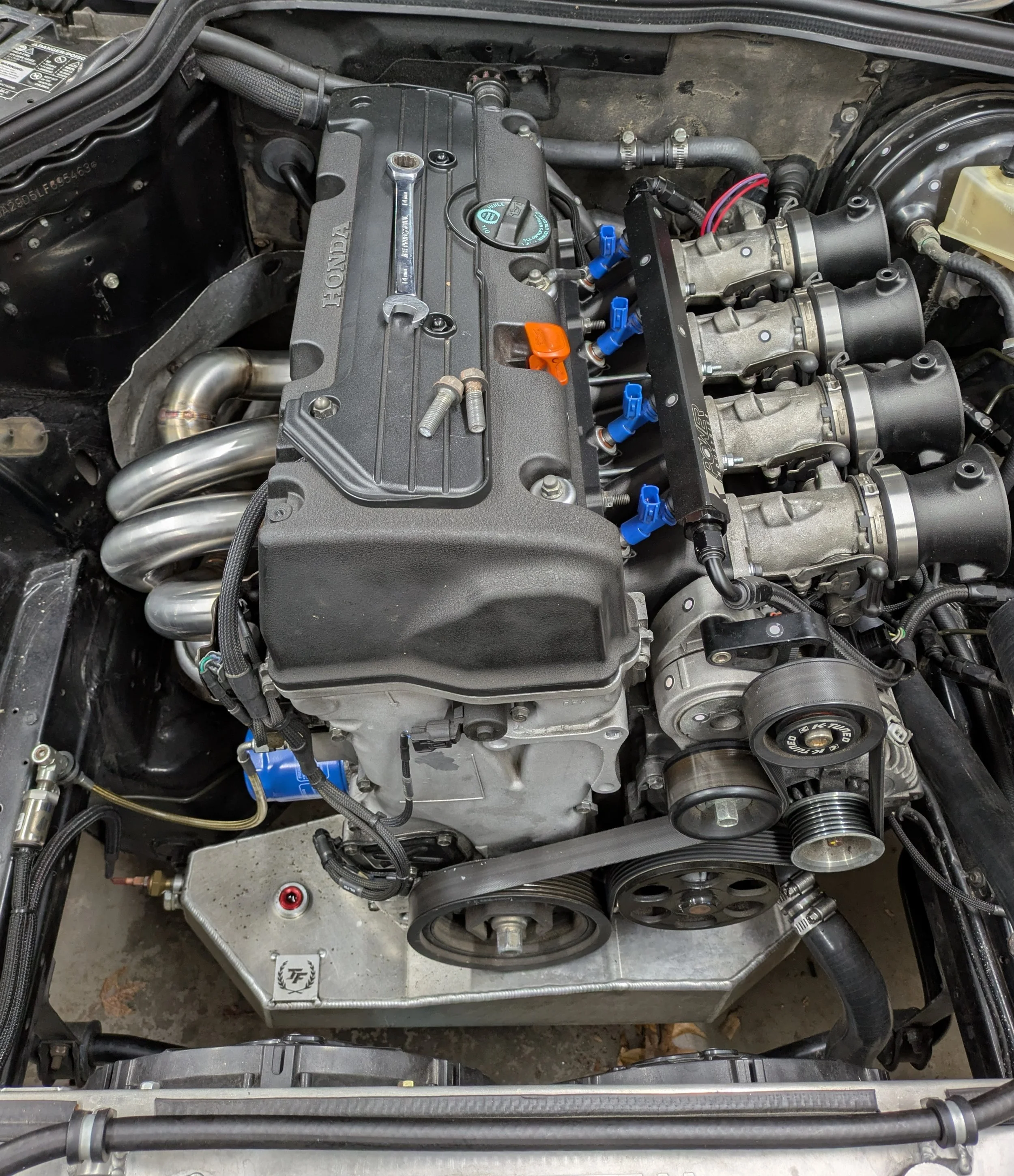
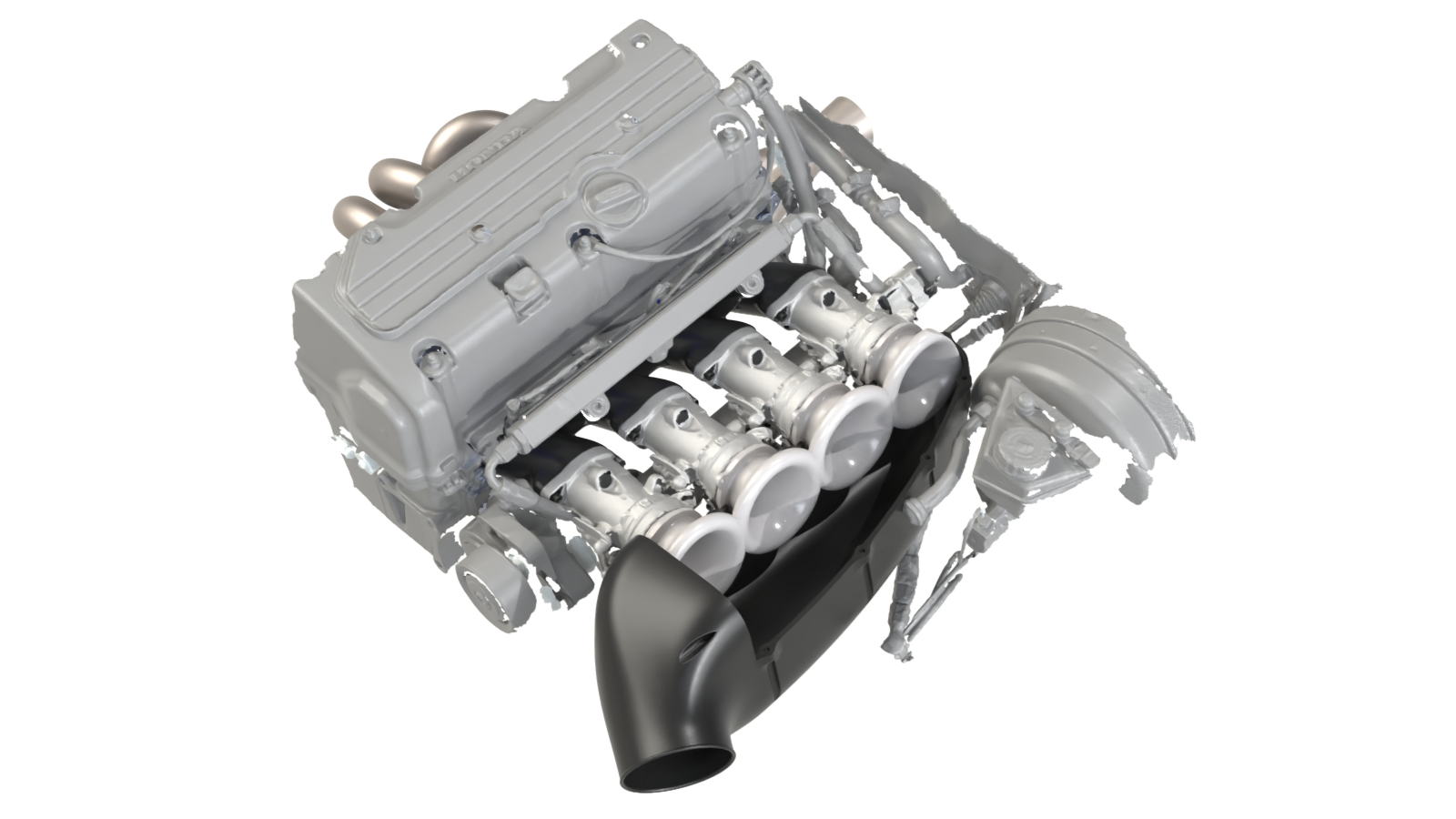
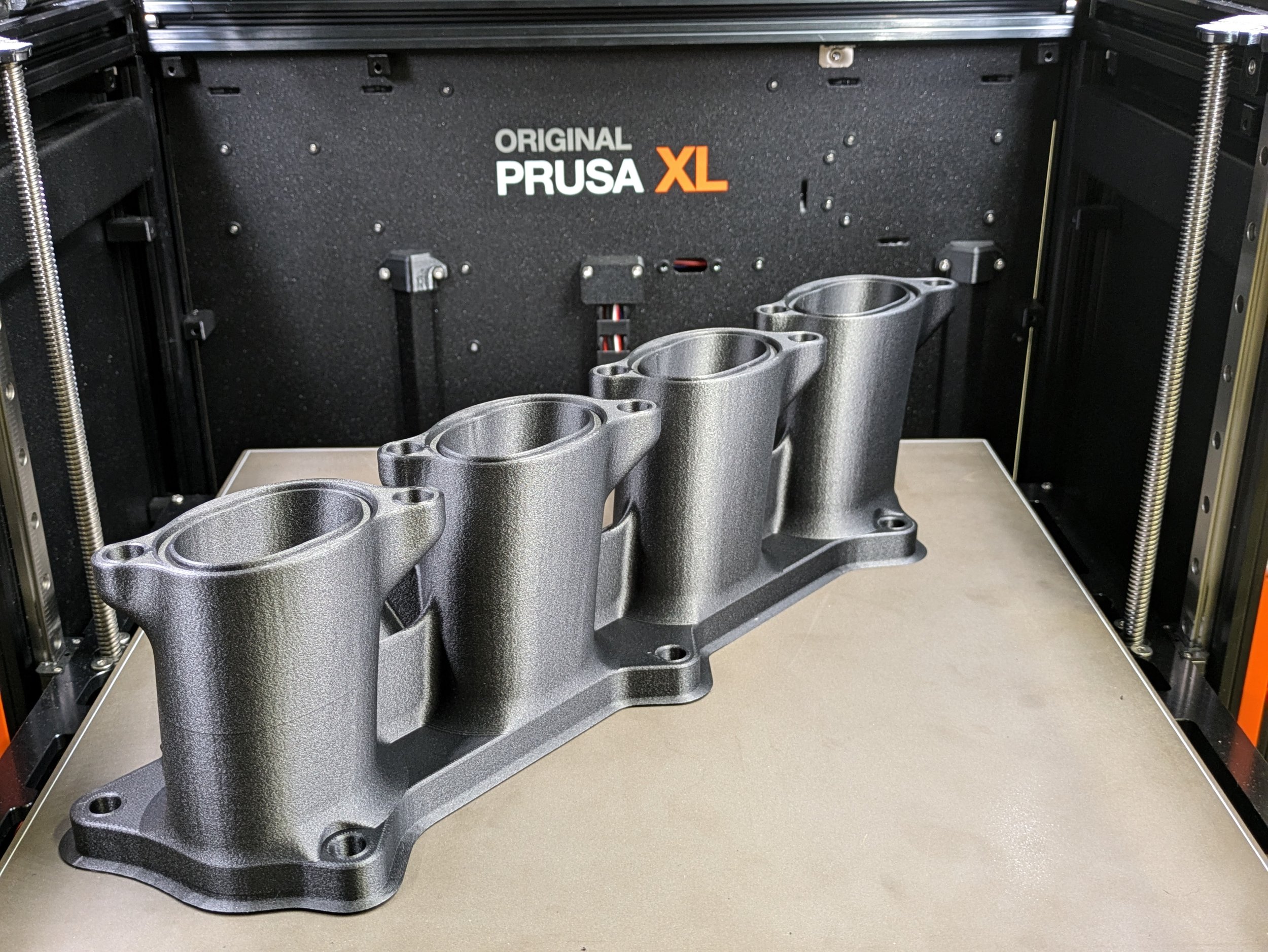
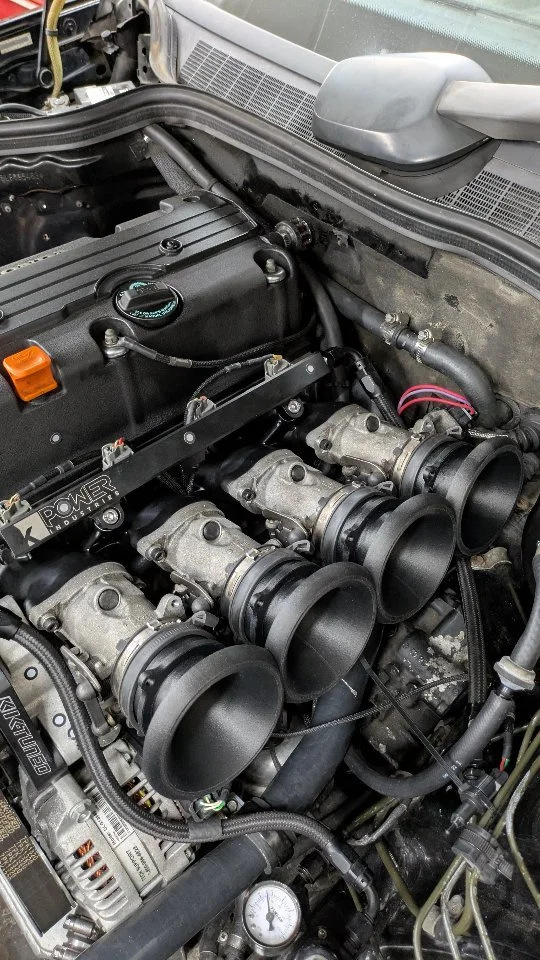
Here's a manifold that adapts BMW S65 V8 ITBs to a Honda K-series that I designed and printed as a cheap ITB setup. It kind of started as a fun CAD exercise and evolved into a fully working prototype. Everything was built off of 3D scans including a scan of the engine in the car for designing around things like the brake booster. The manifold retains the stock K-series fuel injector locations so I can easily swap to my single throttle body plenum without messing with fuel related components. This setup also doesn’t require any modifications to the waterpump/tensioner bracket which is usually required on K-Series ITB setups.
The material PA6-CF20 and it has held up for dozens of hours of driving/tuning. After pulling everything apart and examining the print, I saw no signs of any kind of degradation from fuel which was pretty surprising. I'm currently working on getting the adapter manifold printed out of aluminum and an airbox design for the ITBs so I can get cold, filtered air to them.
I was able to build a basemap and get this setup running and driving on Hondata KPro which has been a ton of fun. Eventually I’ll get it on the dyno for a proper tune before I get a speeding ticket while street tuning. I’d like to pick up a couple of horsepower, but the noise alone is worth it.
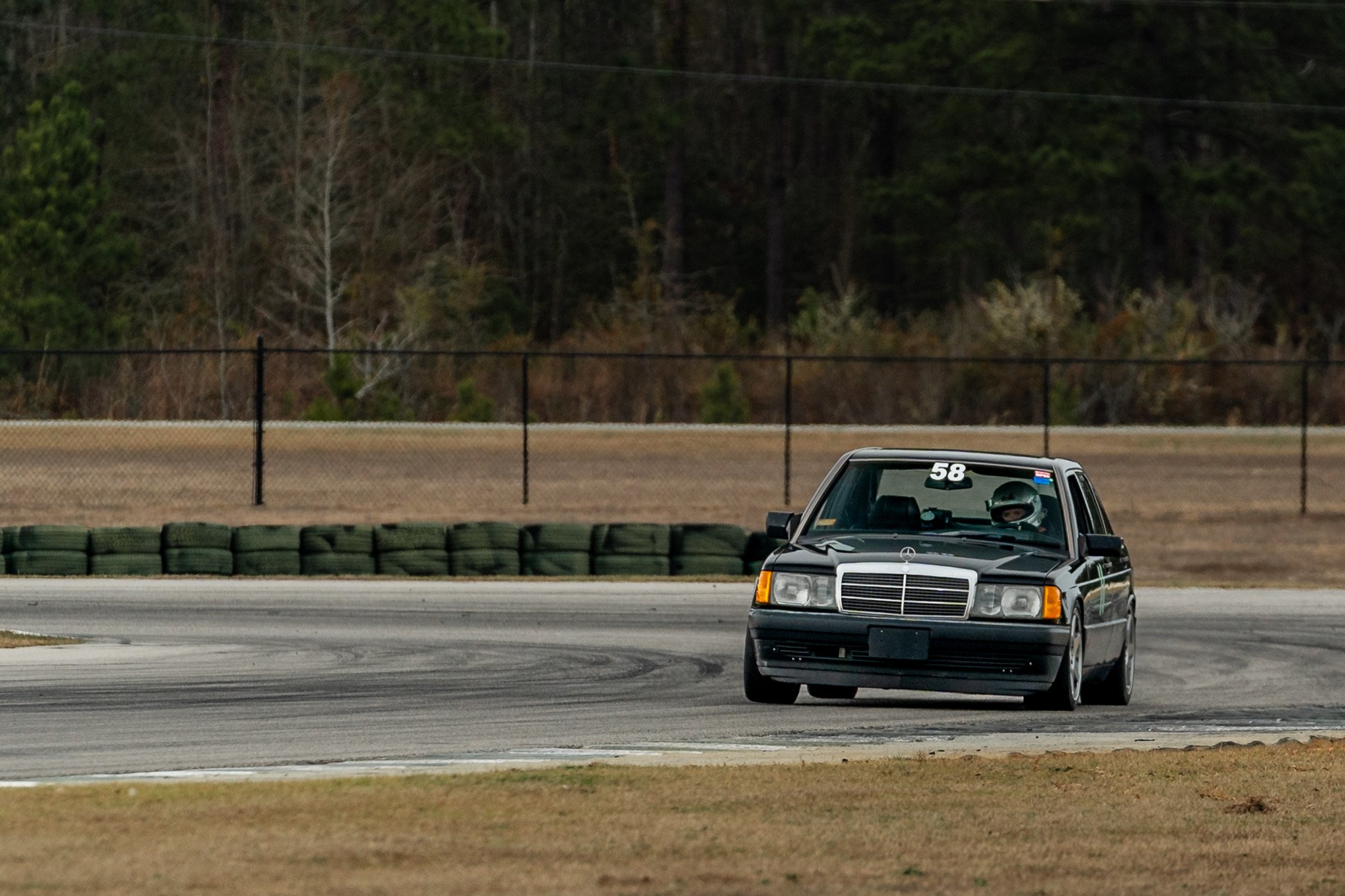
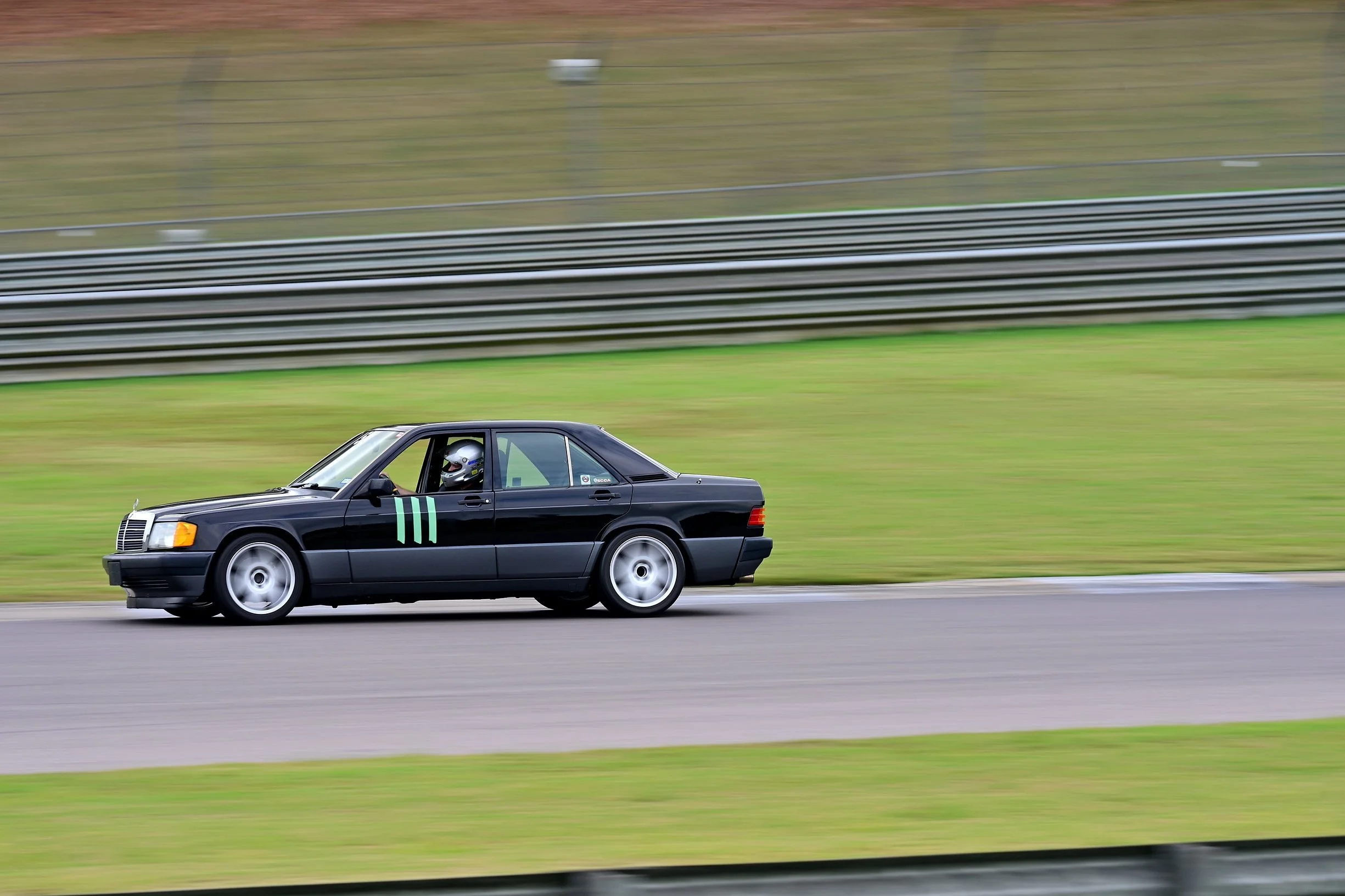
stay up to date!
It’s true what they say, project cars are never truly finished. The latest updates from the project’s Instagram page are linked below.
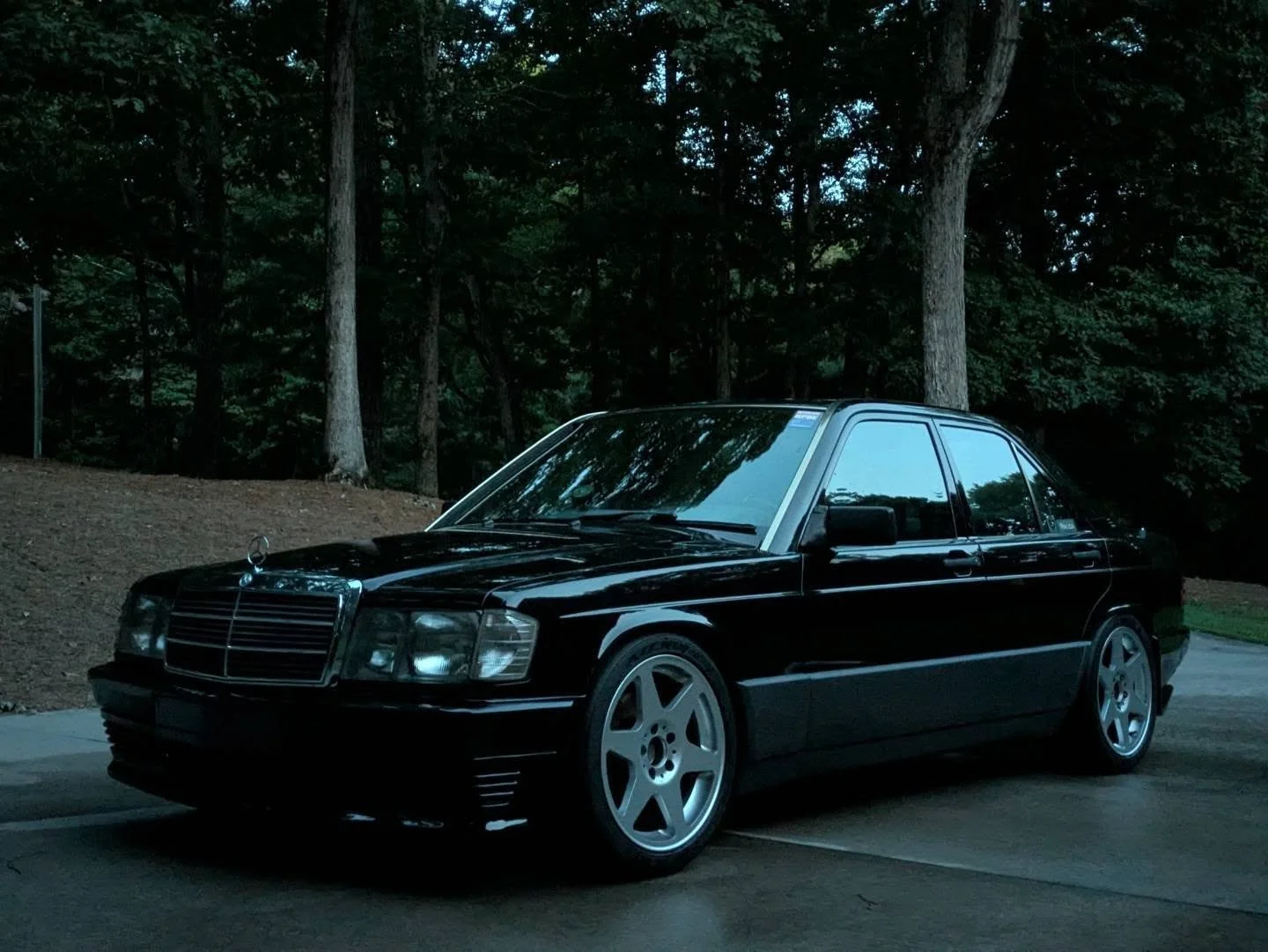
190E K-SWAP PARTS ARE NOW AVAILABLE FOR PURCHASE!

Check out 3D-Speed.com for 190e K-Swap engine mounts, transmission mounts, and other parts!